Rayong, Here We Come: A Spontaneous 2D1N Escape
Rayong has always been a mere stopover for us on the way to somewhere else. But “once in a blue moon,” we decide to make it the primary destination. The occasion? A spontaneous weekend meetup with a friend visiting from abroad.
Rayong is famous for three things: lush fruit orchards, incredible seafood, and endless coastlines. The journey is roughly 200km—a solid 3-hour drive that mirrors the trip to Hua Hin. However, with the promise of salty sea air and fresh seafood (minus the Hua Hin crowds!) at the finish line, the drive felt much shorter. Plus, this time I was a full-time passenger, so it was “no sweat” for me!
🏨 Our Stay: Sinsiam Resort (Laem Mae Phim Beach)
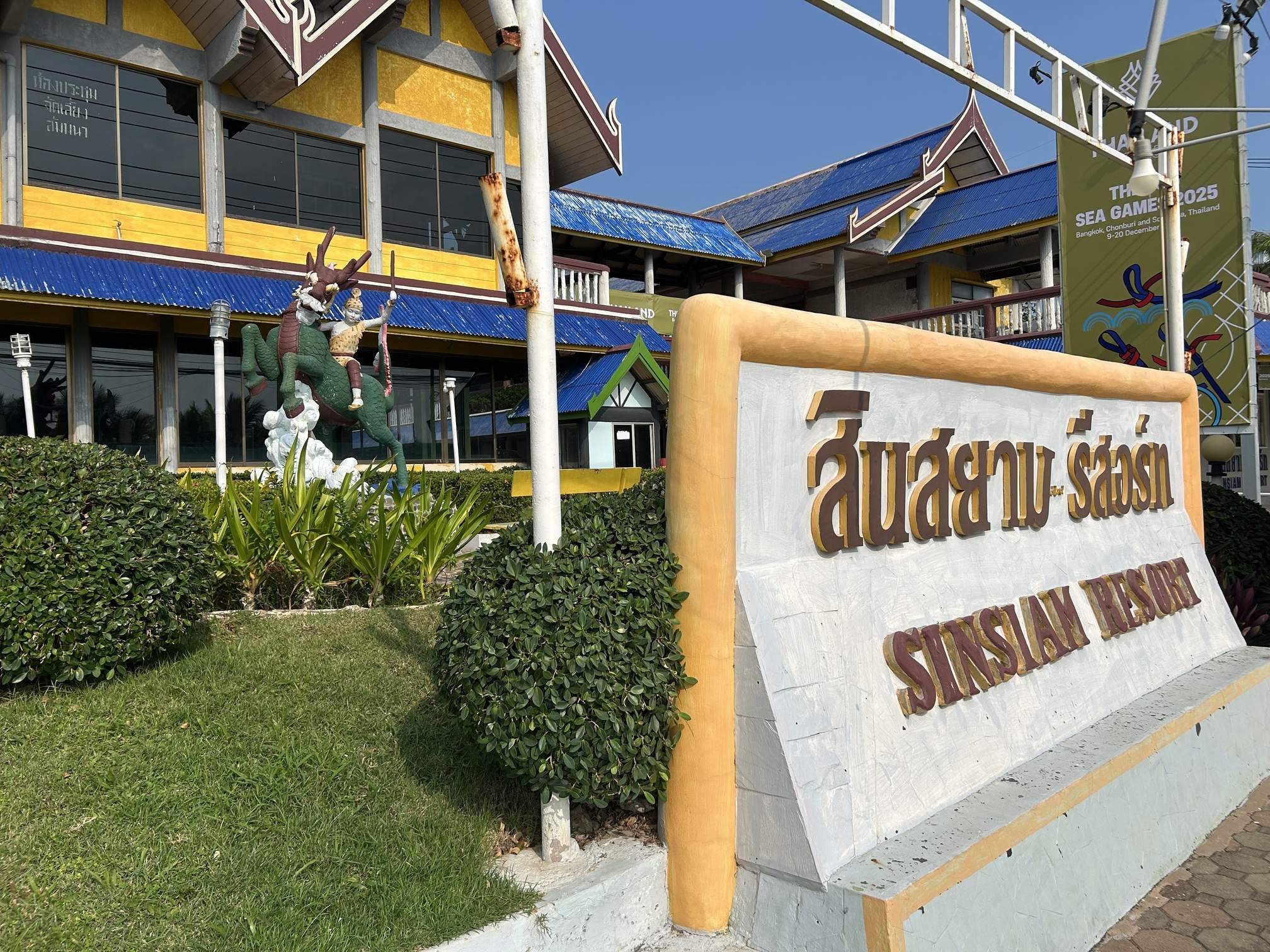

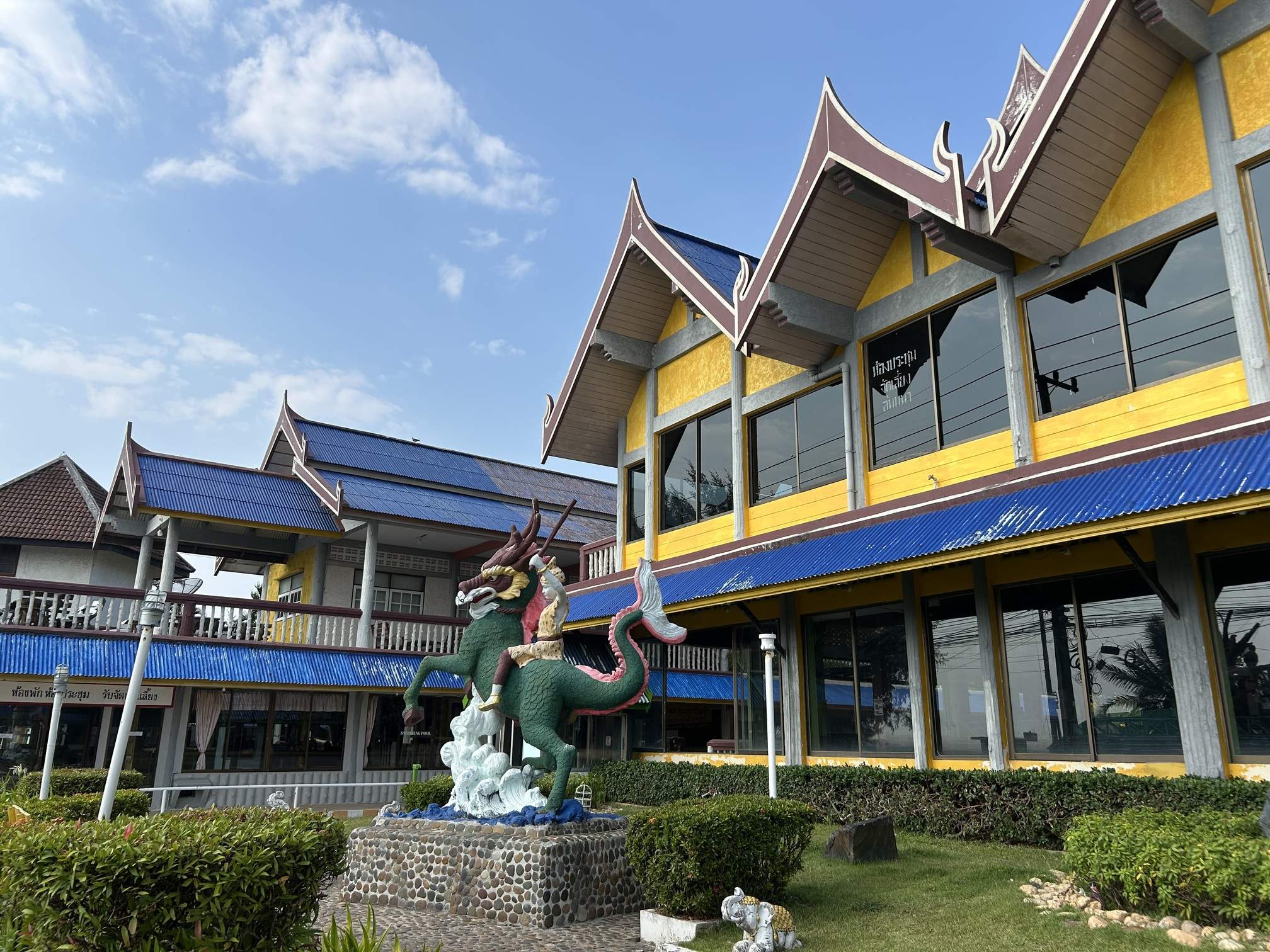
We stayed at Sinsiam Resort (โรงแรมสินสยาม). The choice was easy—the property belongs to my husband’s friend’s family.
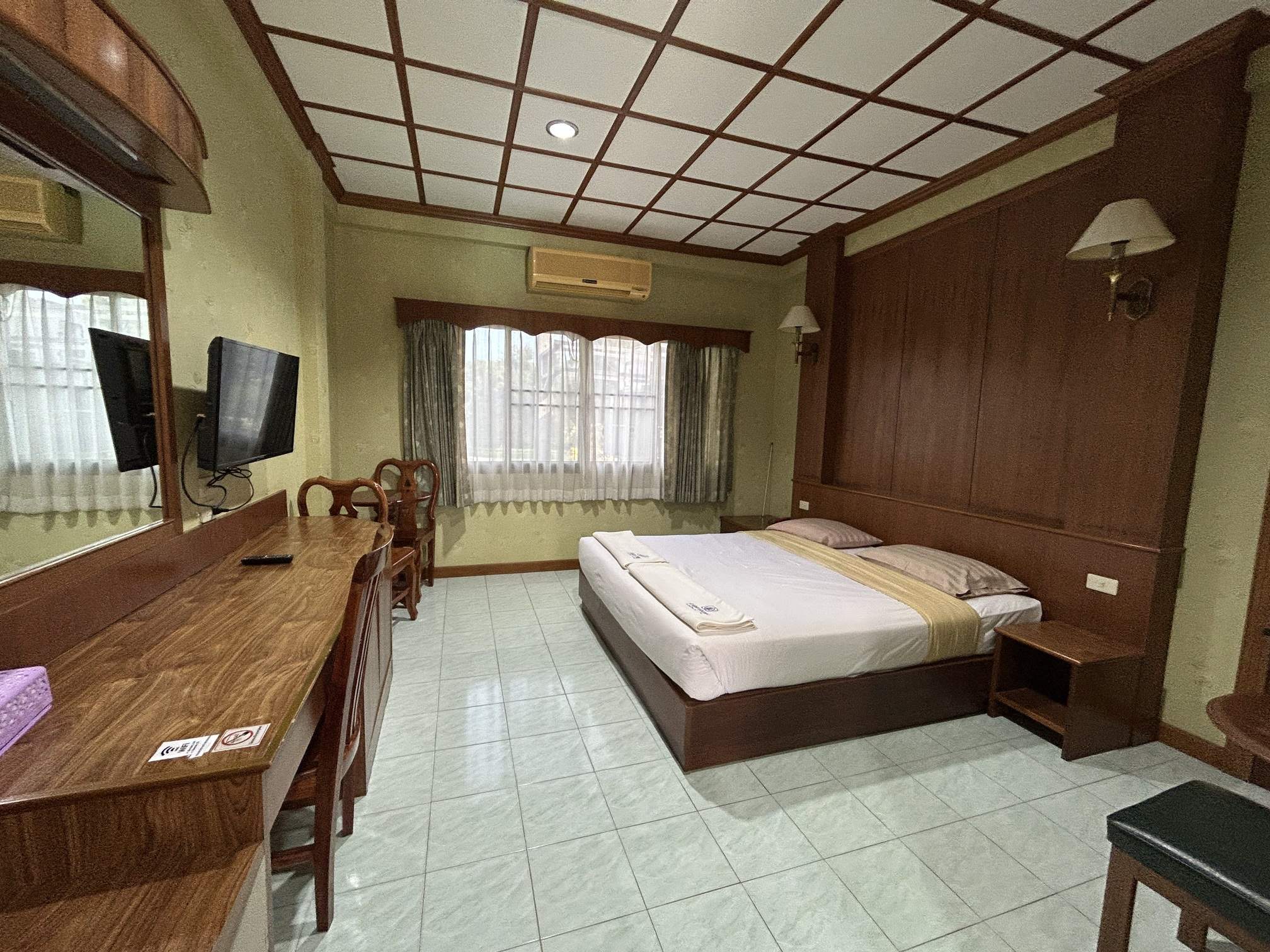
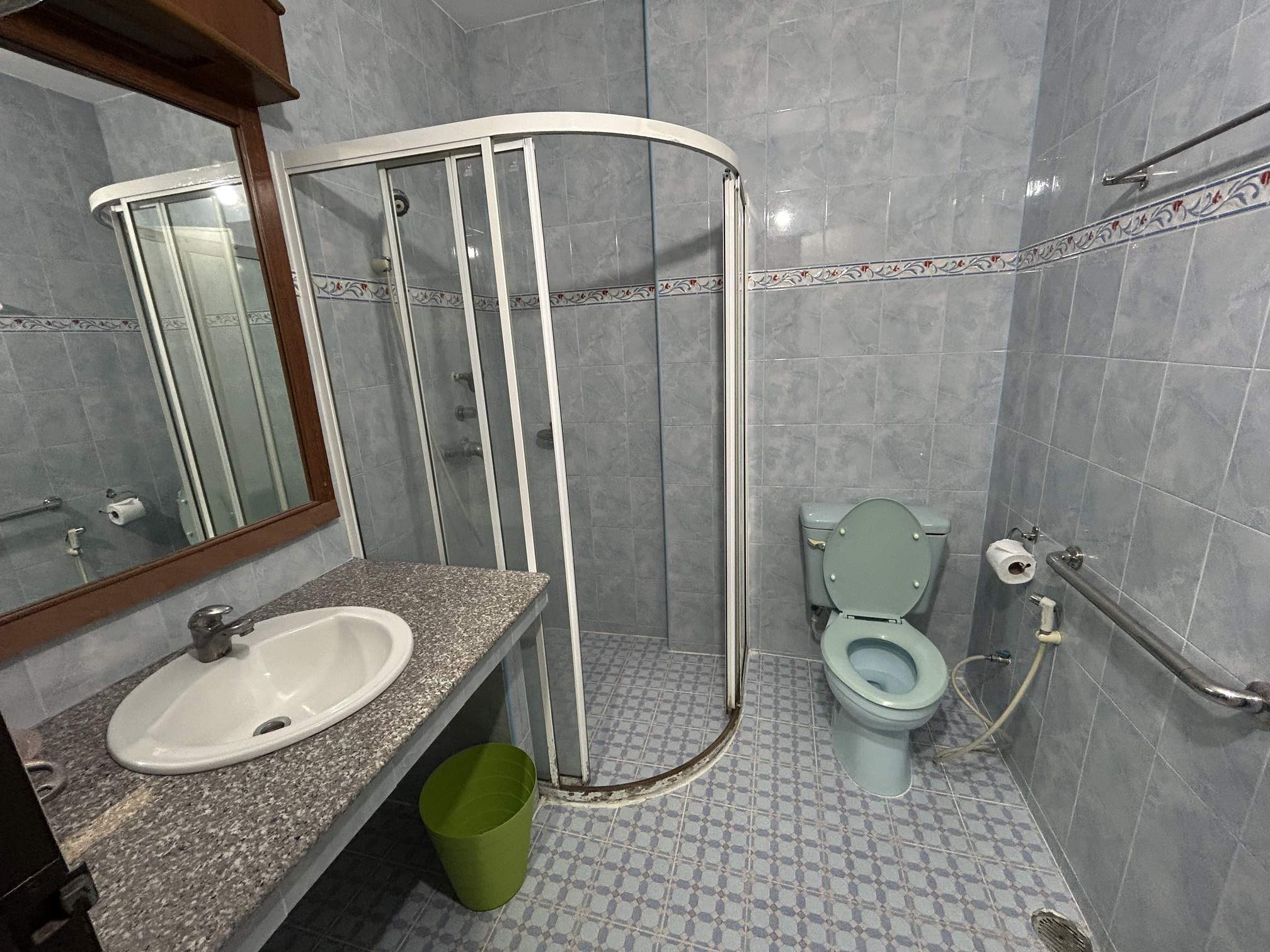
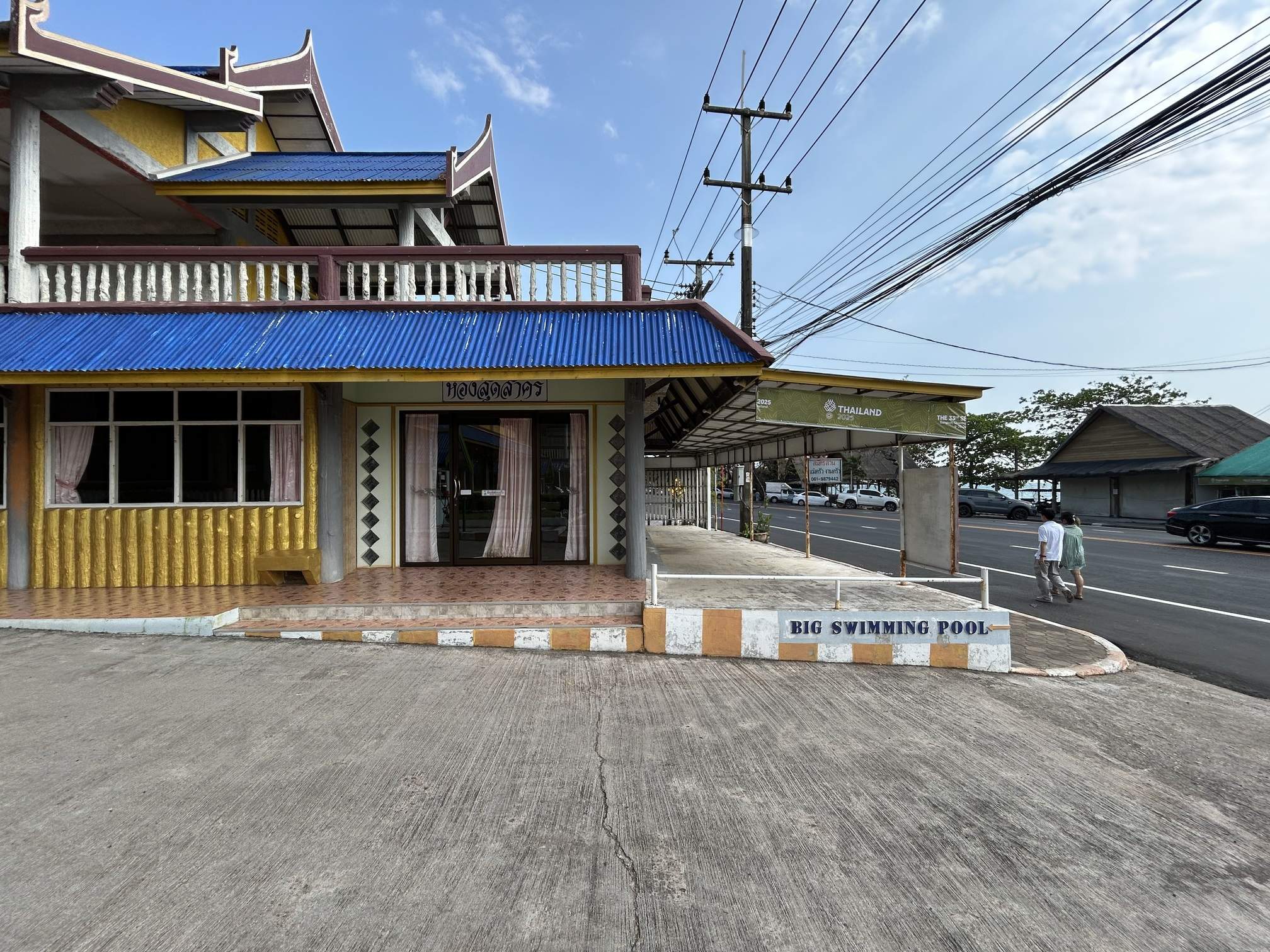
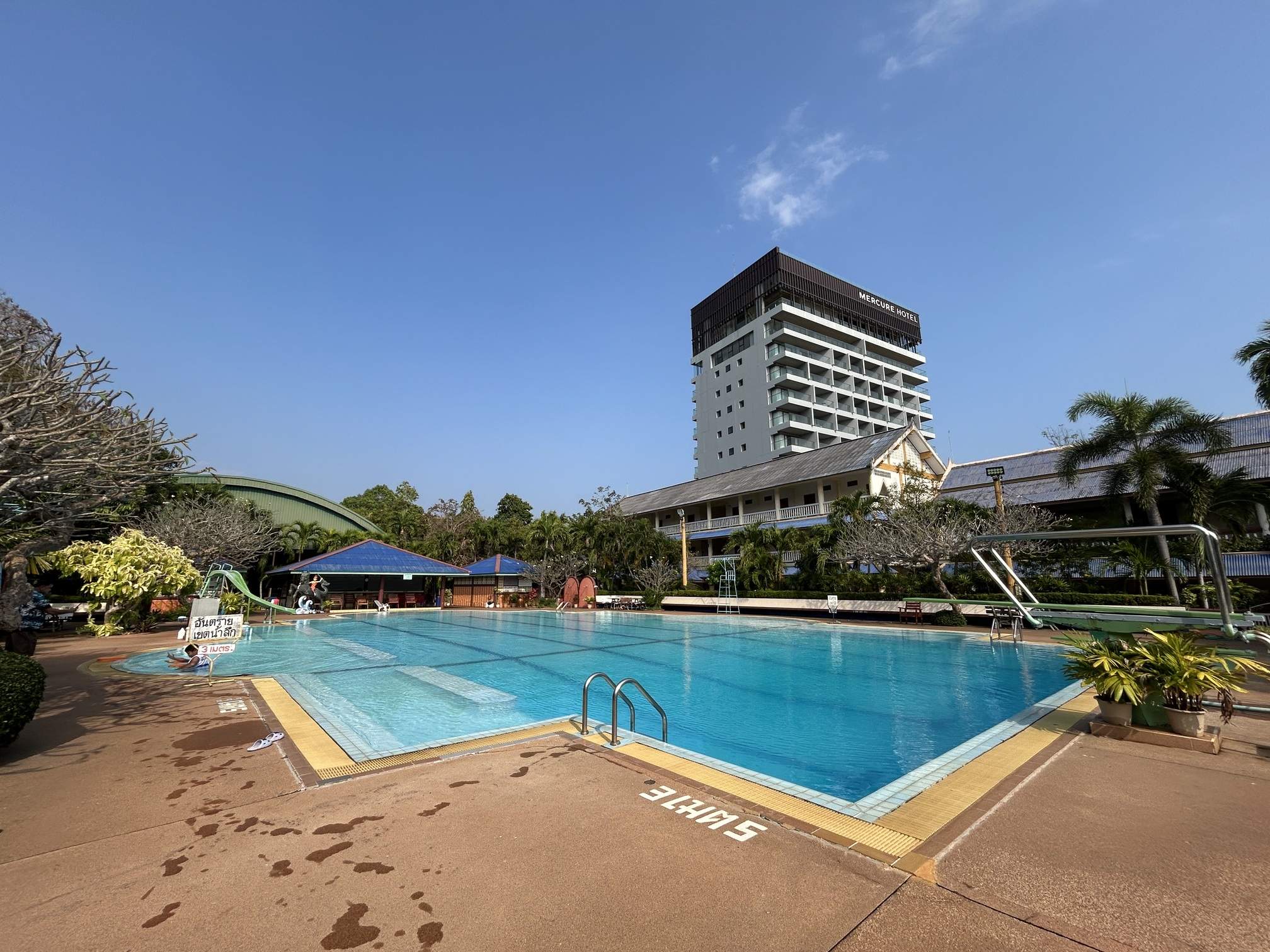

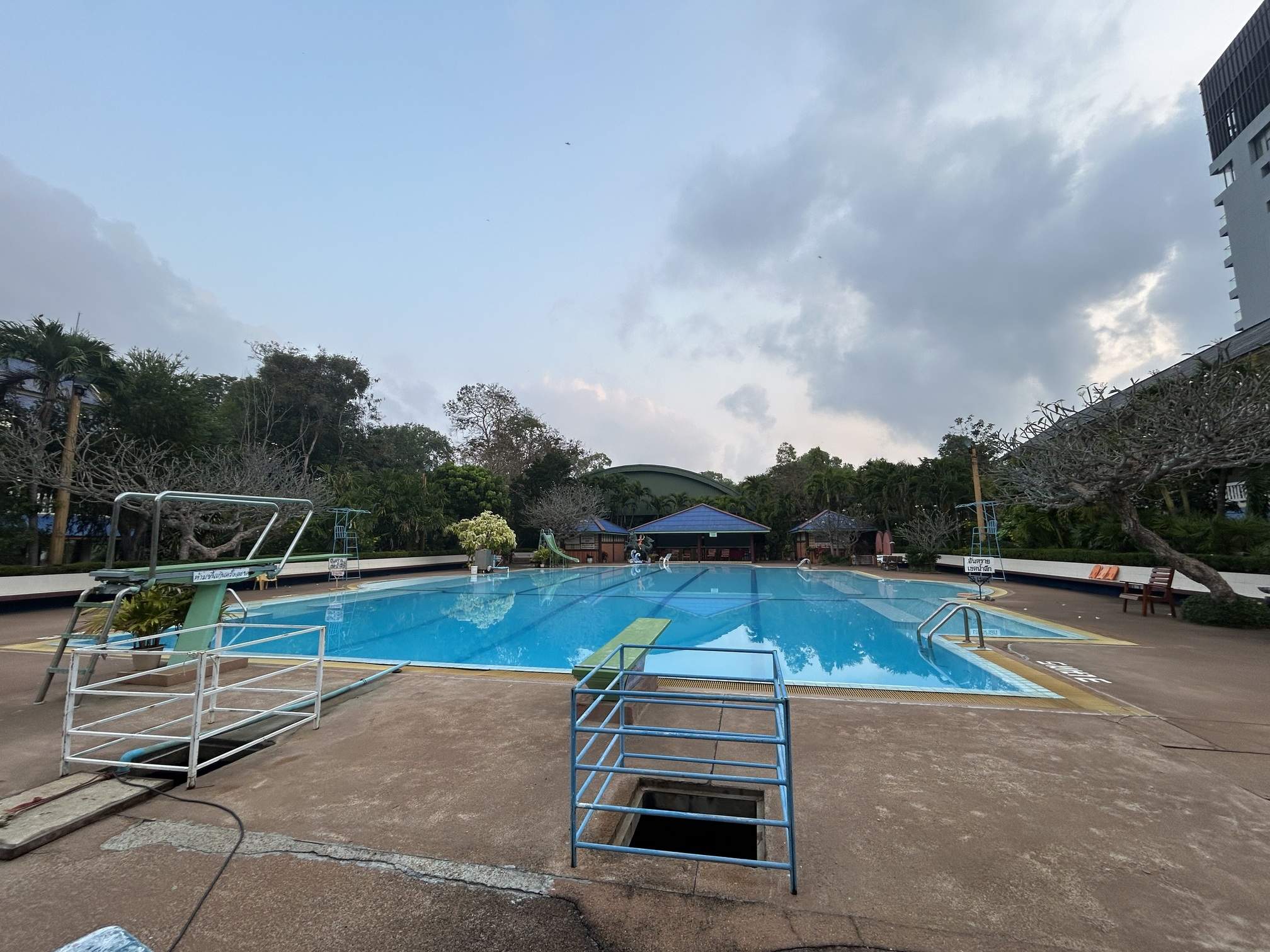
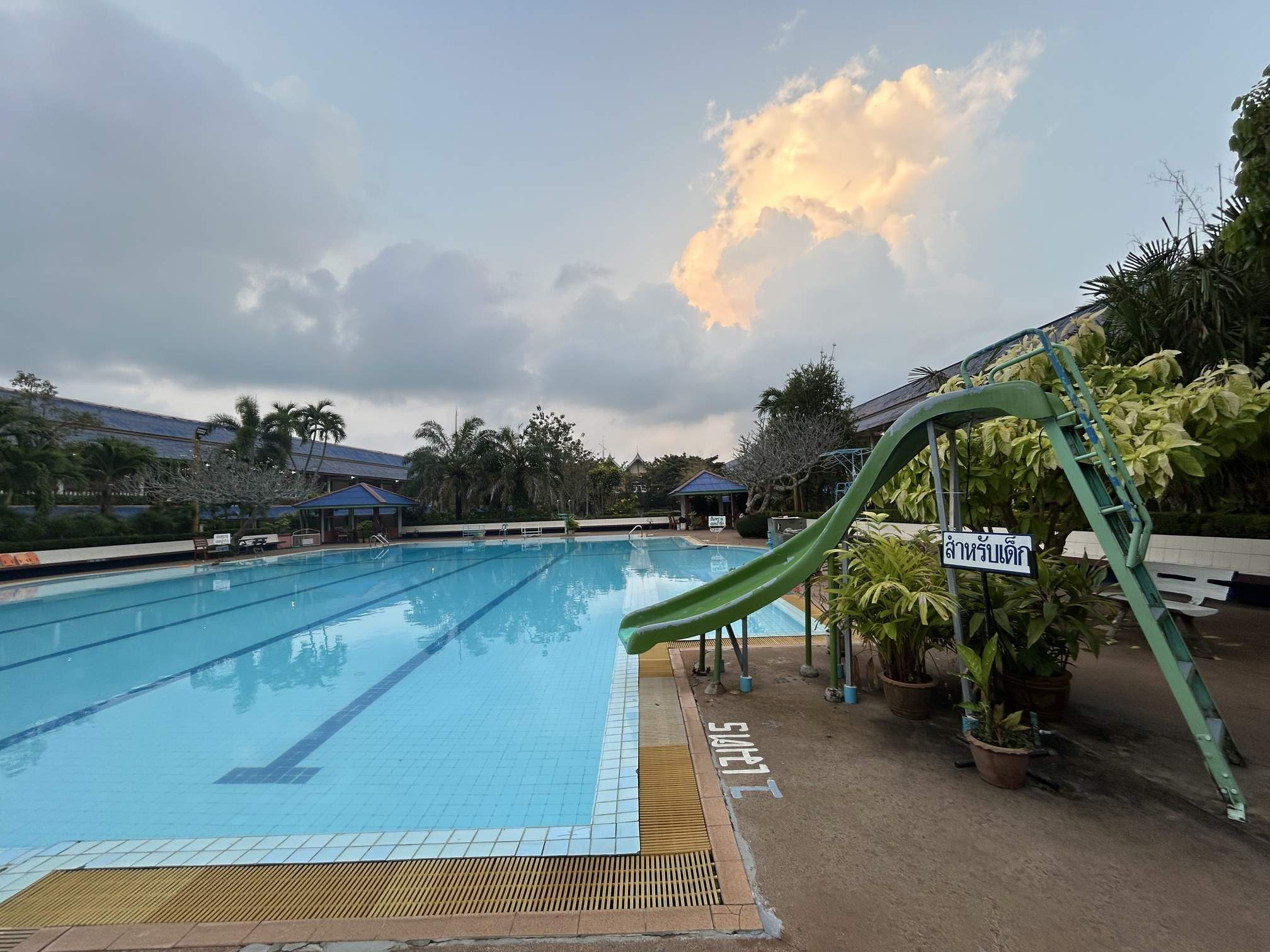
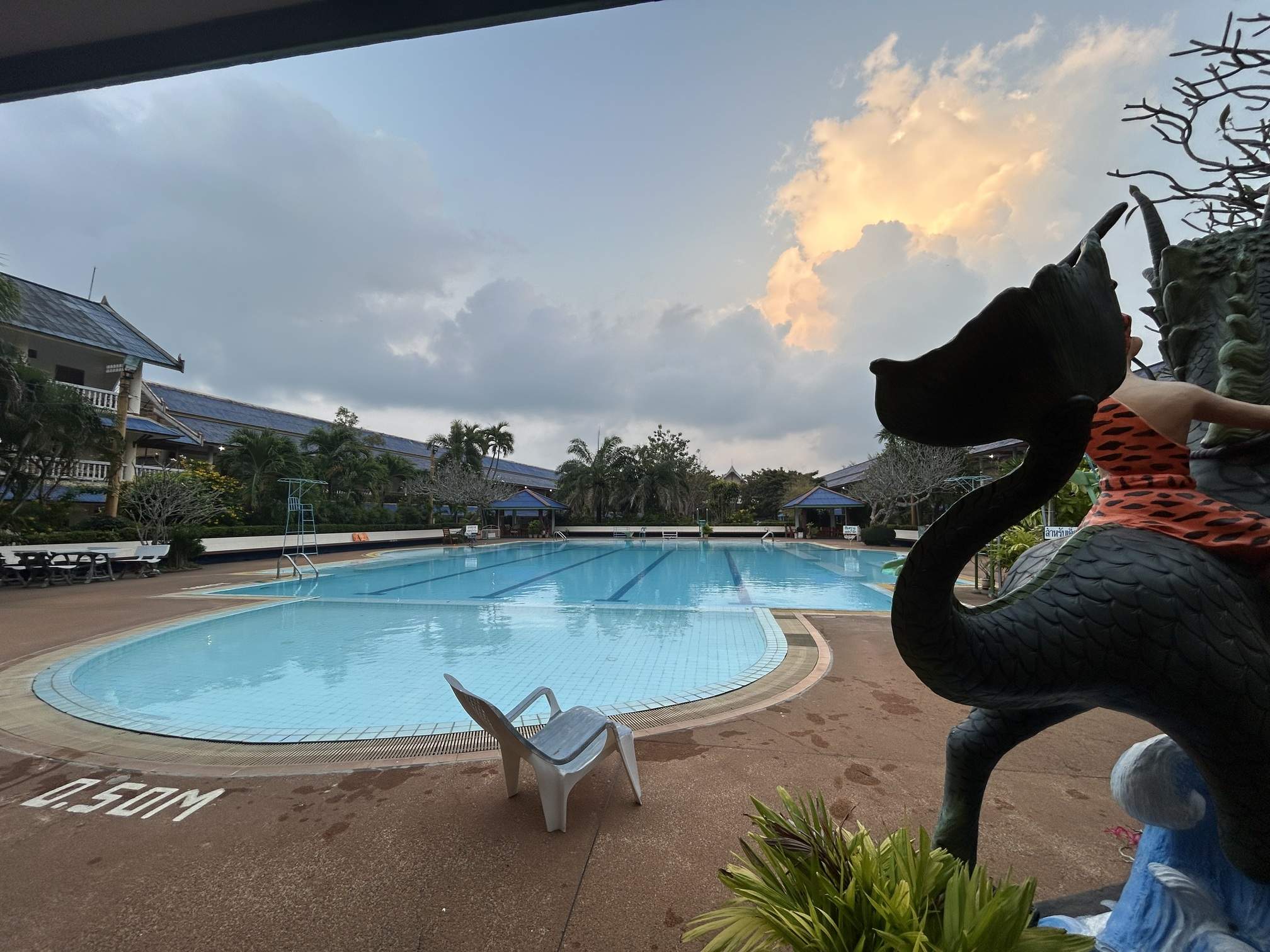
Having been a fixture on Laem Mae Phim for over 30 years, it was one of the pioneering resorts back when Rayong was still a hidden gem. While the age shows in some of the classic decor, we were genuinely impressed by the maintenance. The cleanliness is top-notch, and the pool—a rare 1.5-meter (5-foot) deep basin—was actually clearer than the one at my own condo! It even features a slide and a jumping board, charms you rarely find in modern “minimalist” hotels.
Why we liked it:
- Budget-Friendly: Classic Thai price points with plenty of space.
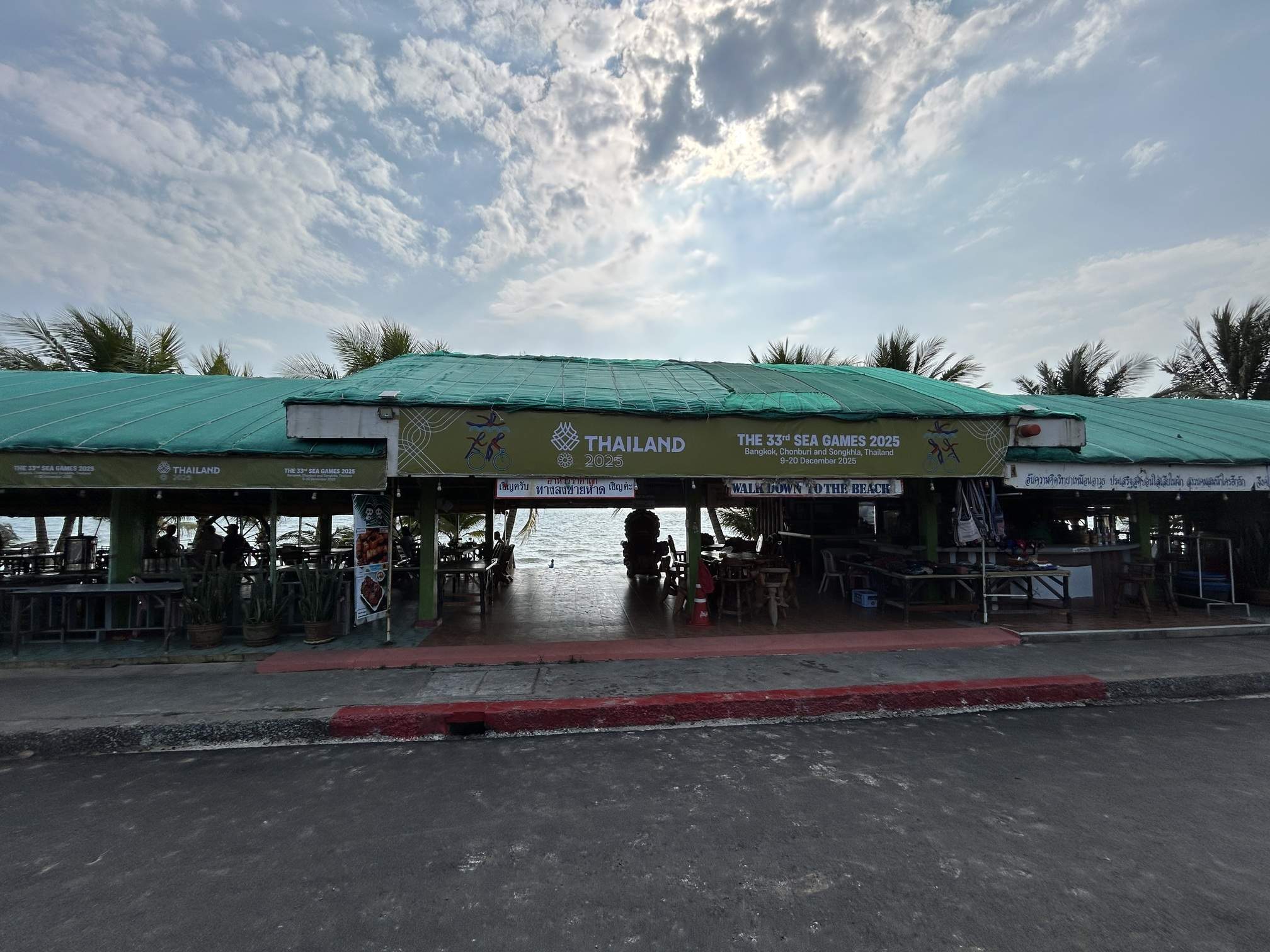
- Prime Location: It faces a row of local seafood stalls rather than commercialized strips.
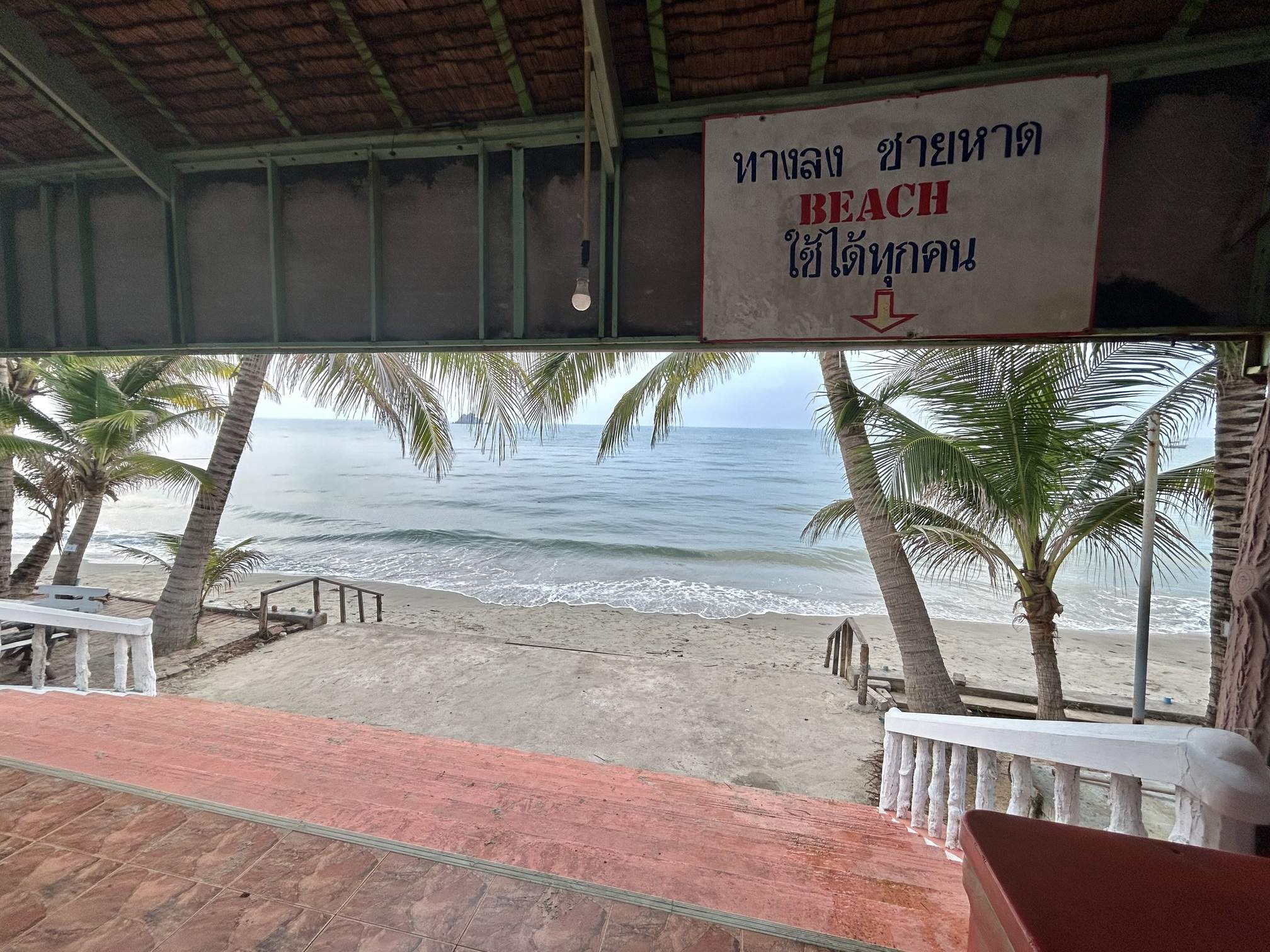
- Secluded Beach: Direct access to a clean, quiet shore without the clutter of endless rental chairs.
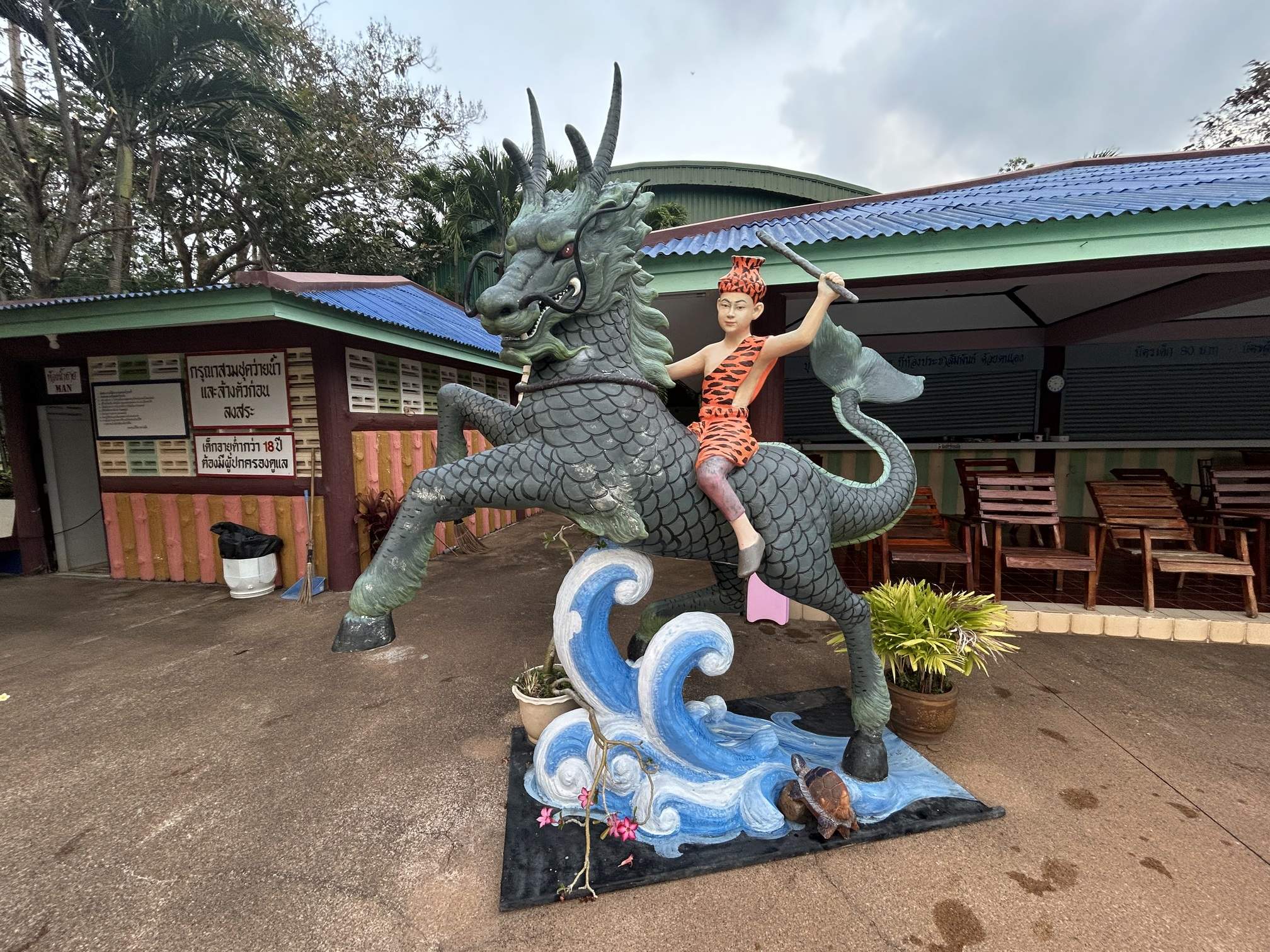
- Photo Op: Keep an eye out for the statue of Ma Nil Mangkorn (ม้านิลมังกร)—the legendary “Dragon Horse” from the Thai epic Phra Aphai Mani.
🦀 The Seafood Mission: Where the Locals Eat
My goal was simple: find fresh seafood where the locals go. We hit two spots that tell two different stories:
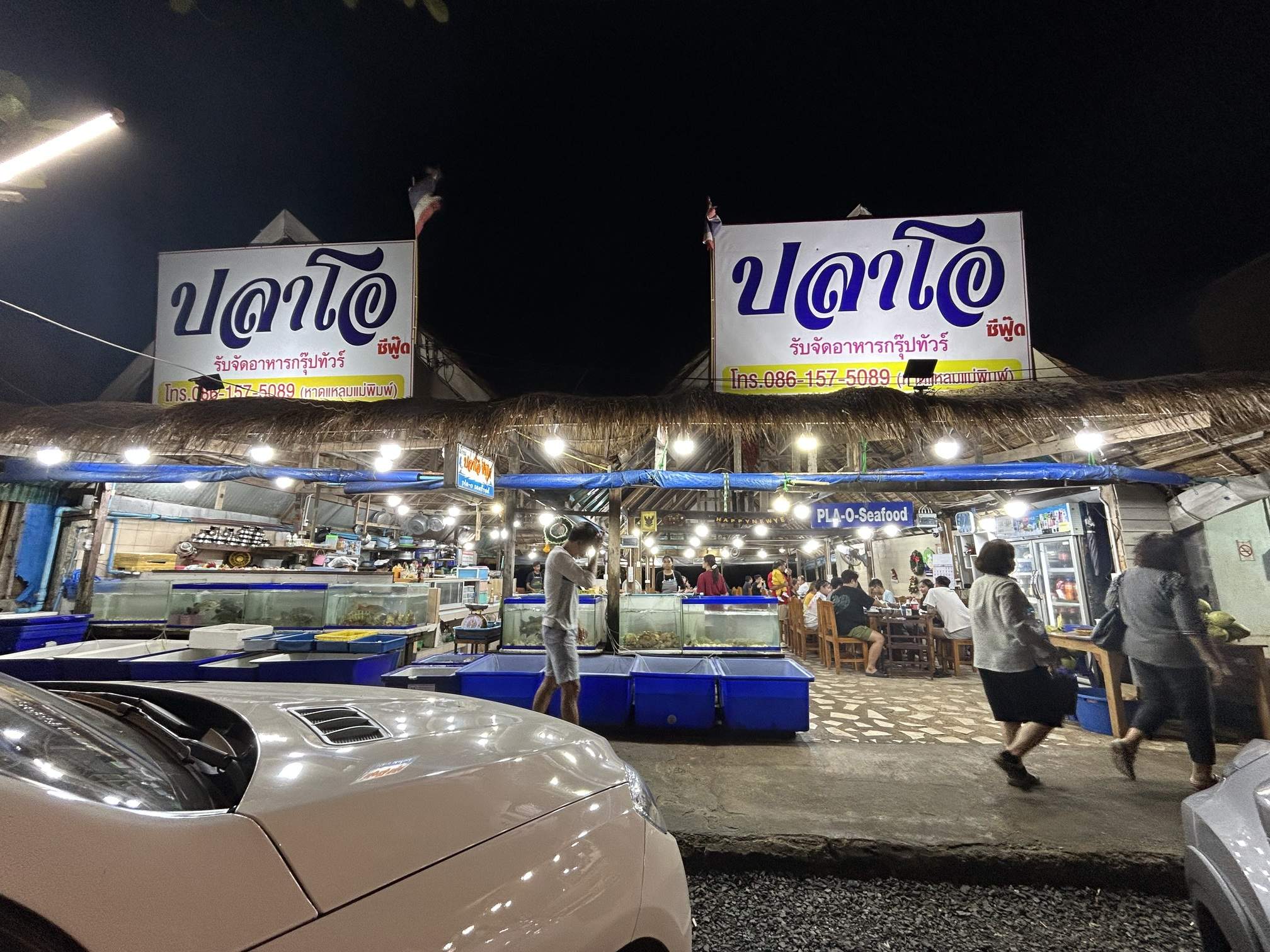
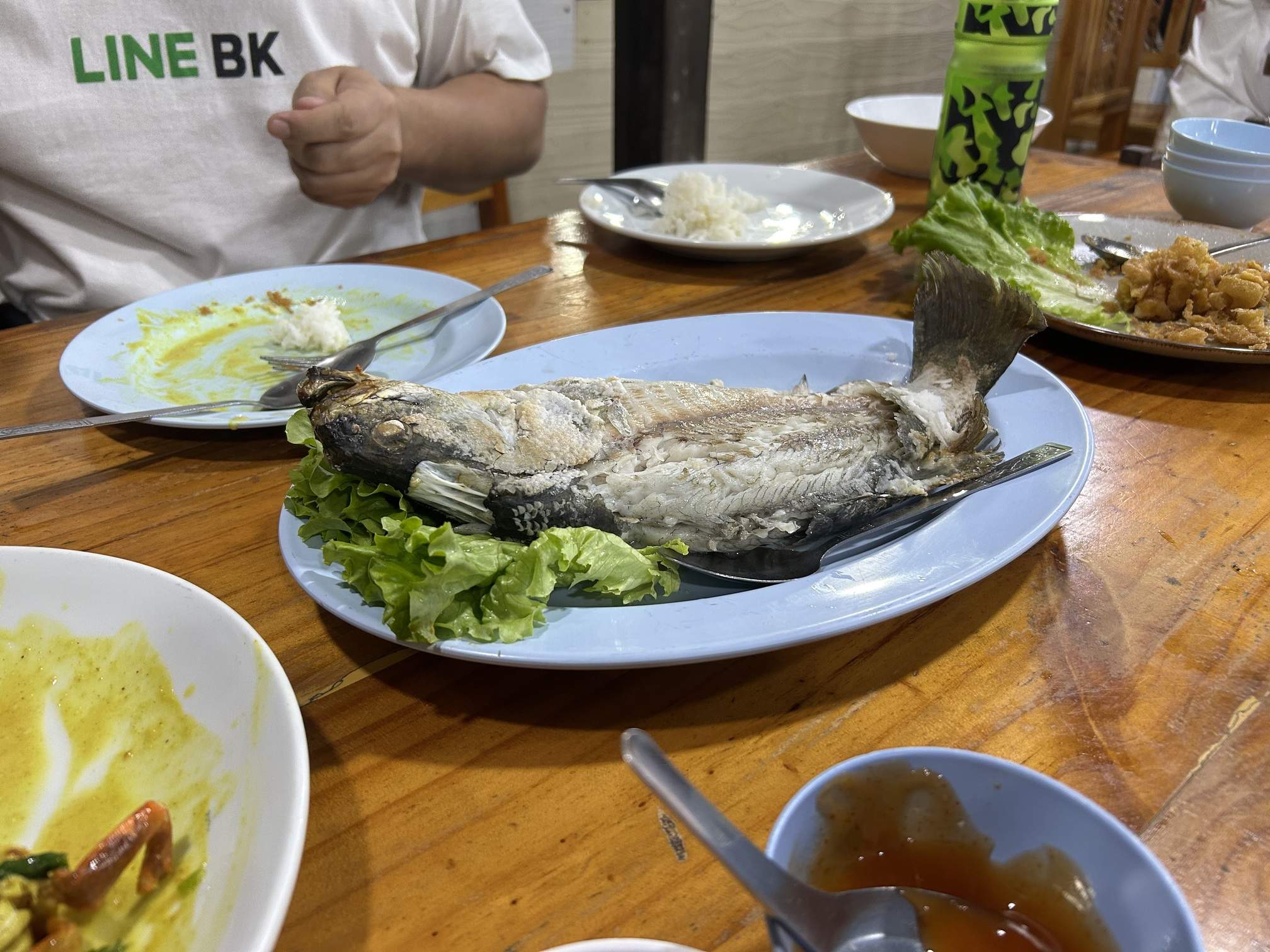
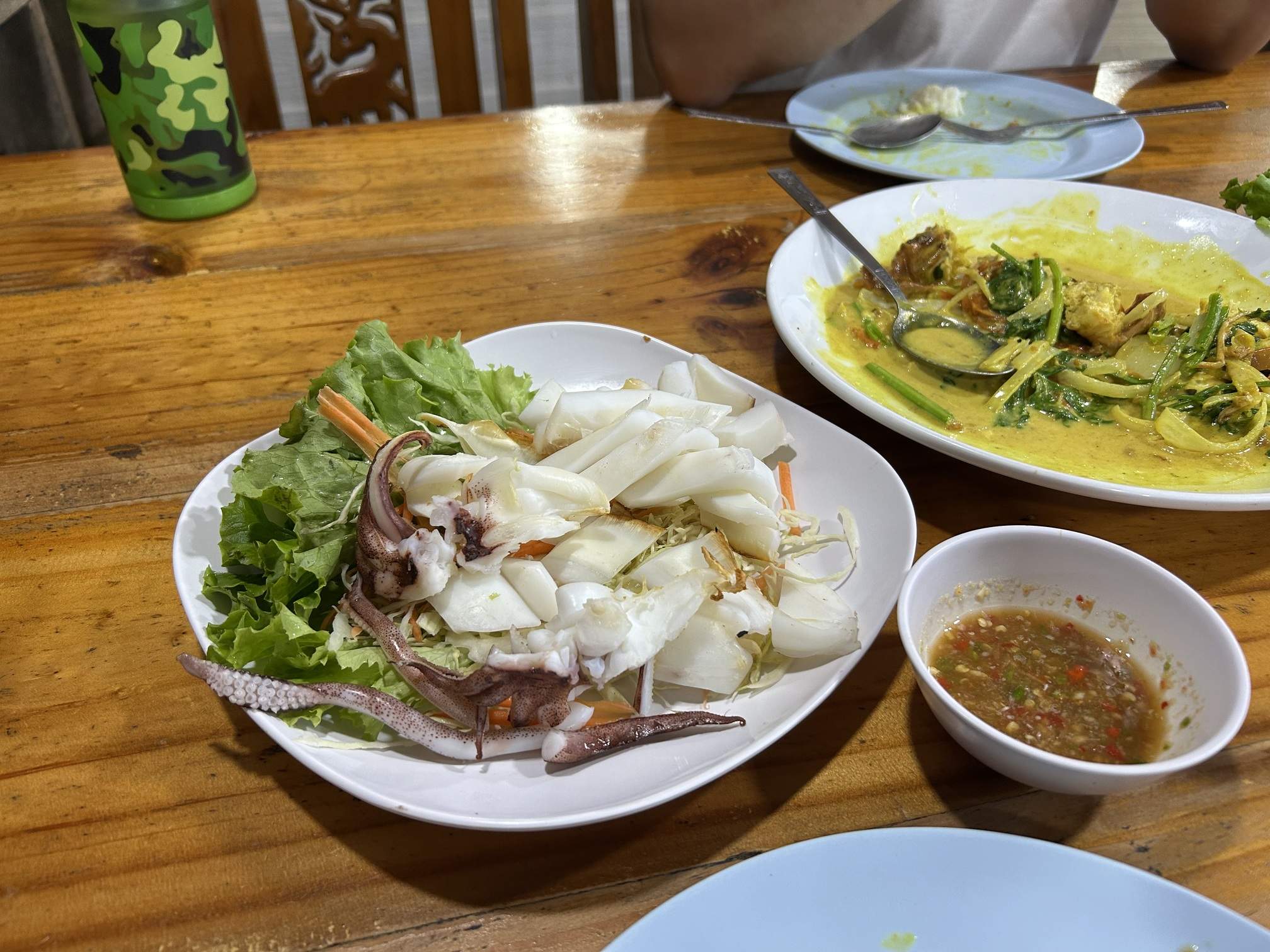
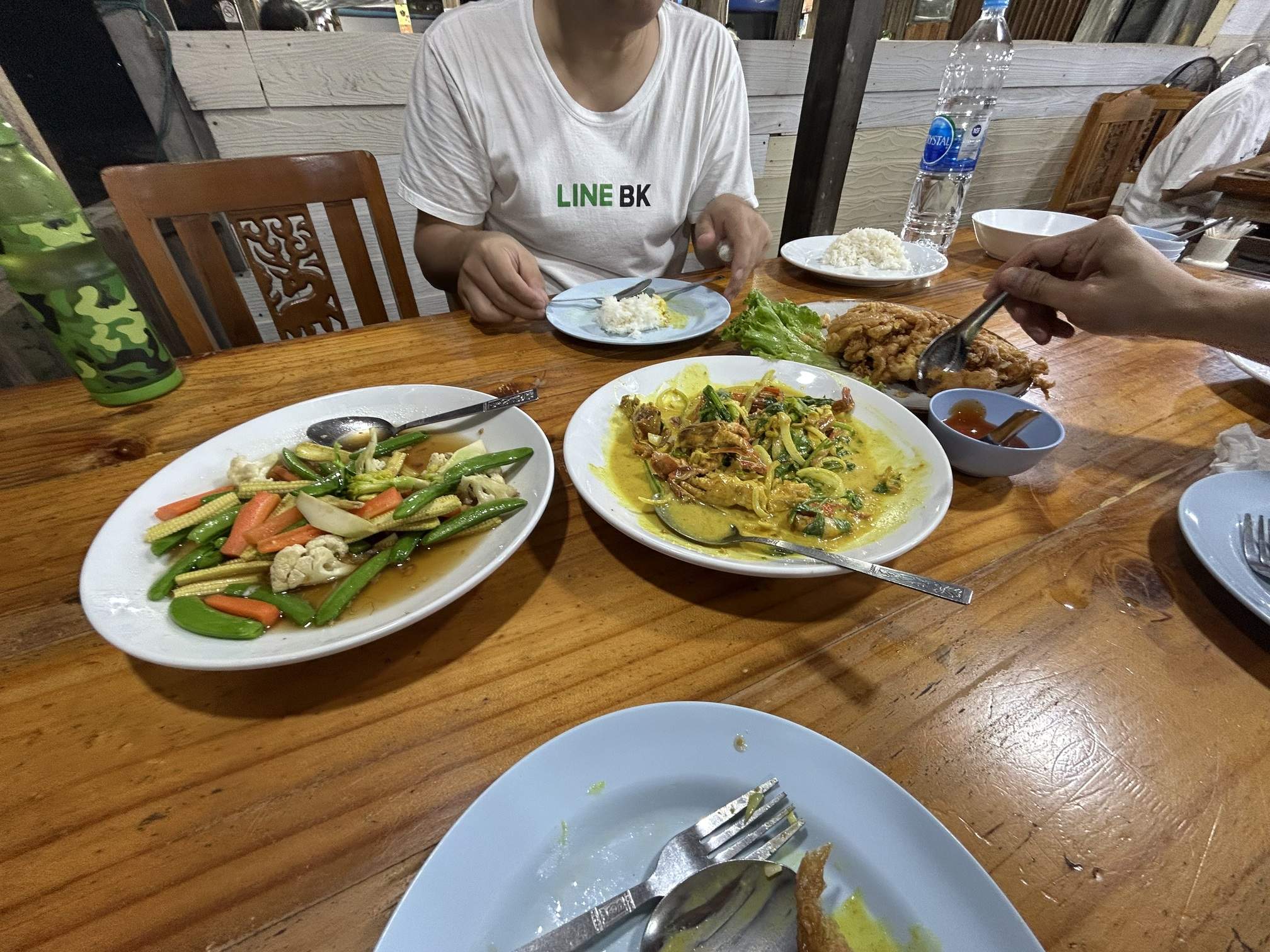
1. Pla-O Seafood (ร้านปลาโอซีฟู้ด) We chose this spot simply because it was packed—usually the best sign in Thailand! At 1,300 Baht for 5 dishes, it was an absolute steal.
- The Spread: Soft-shell crab curry, grilled squid, stir-fried mixed vegetables, and a fluffy prawn omelette.
- The Star: The Grilled Sea Bass. Beyond the usual lemongrass, they used kaffir lime leaves—a fragrant twist that elevated the dish entirely.

2. Je-Tai Pupen (ร้านเจ๊ต่าย ปูเป็น) This bill came to 1,065 Baht and focused on the heavy hitters.
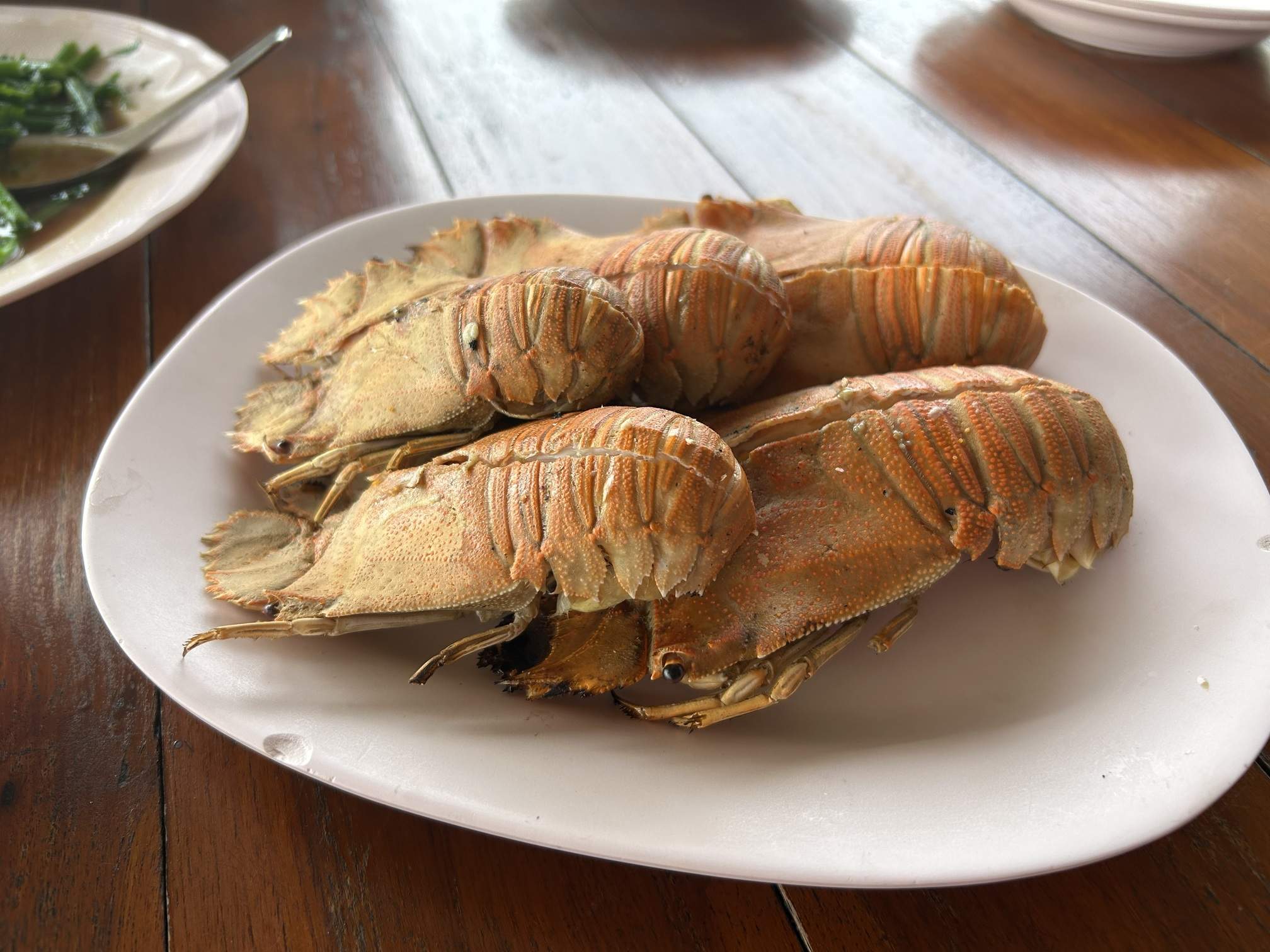
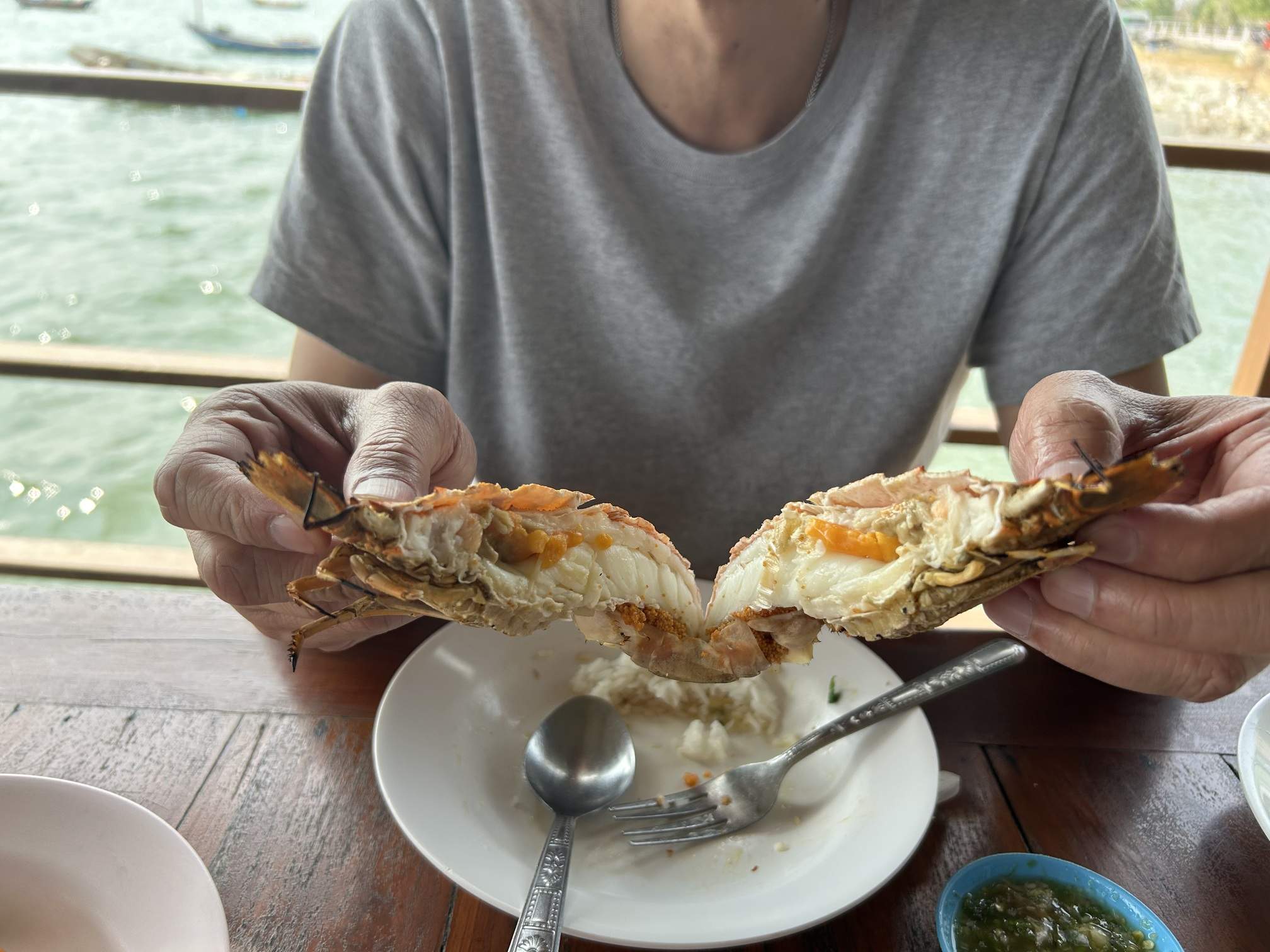
- The Highlight: The Rock Lobster (Mantis Prawn) (950B/kg) was incredibly fresh.
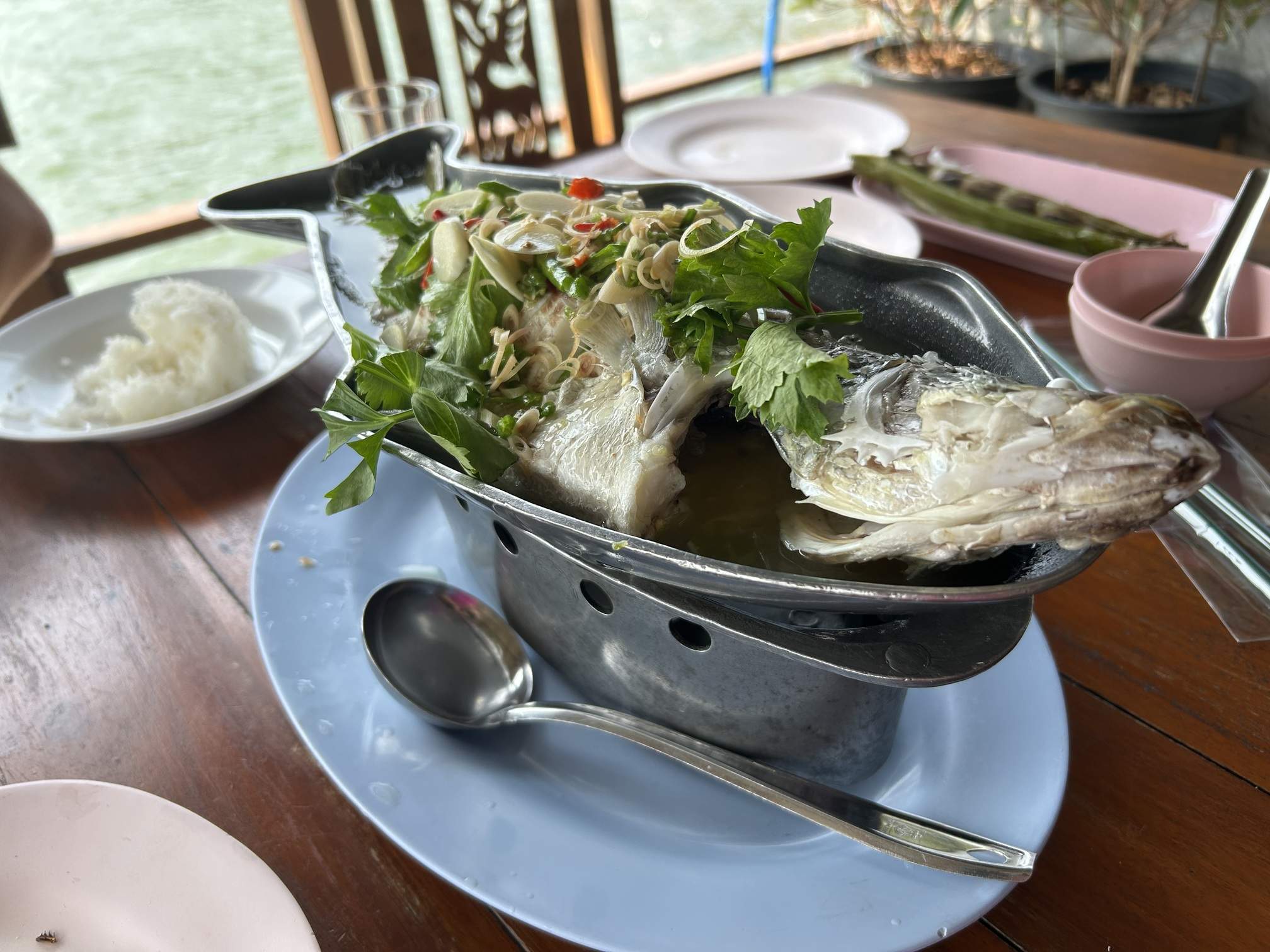
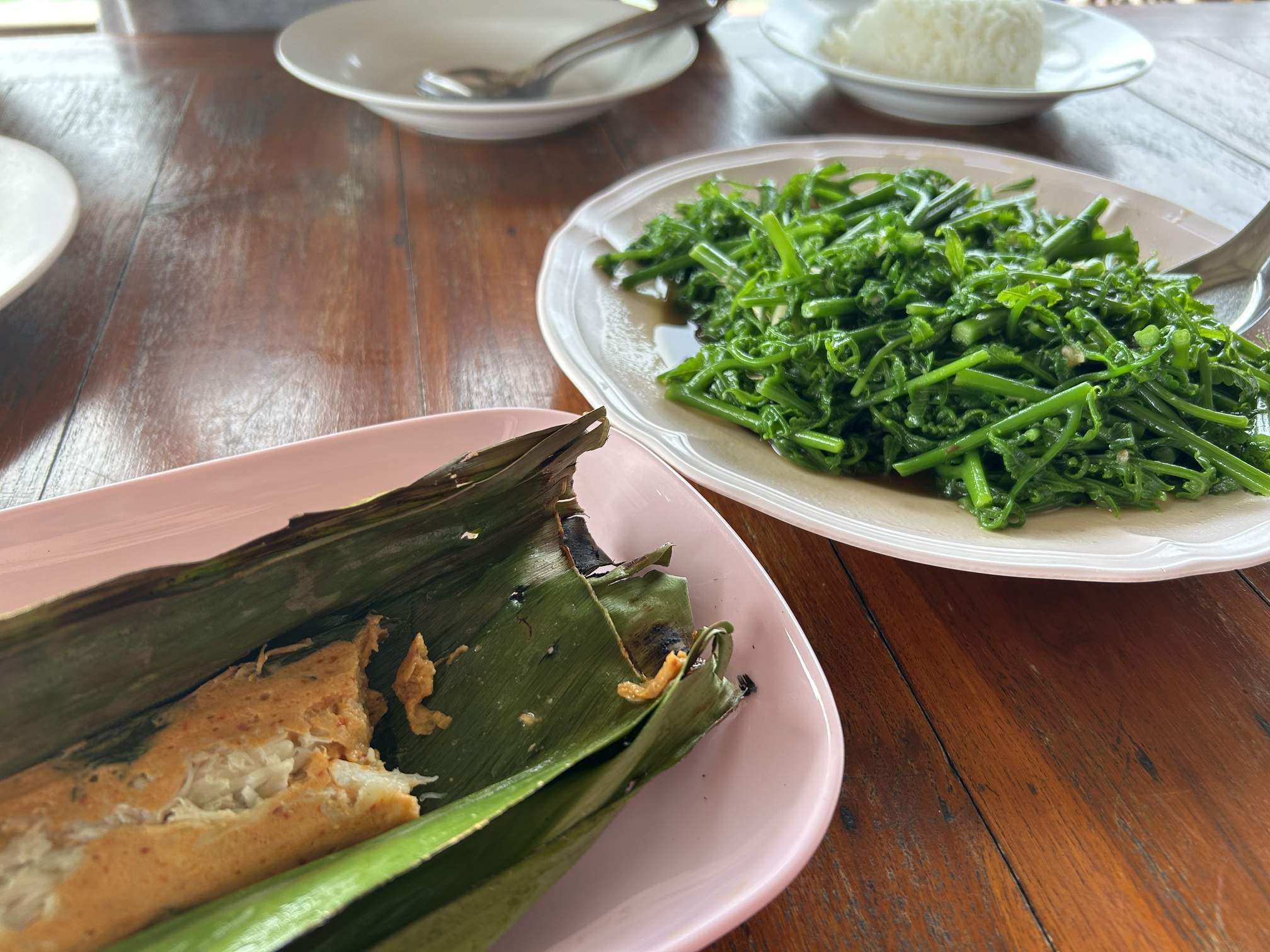
- The Extras: Steamed sea bass with chili and lime (400B), stir-fried paco fern (100B), and “Hor Mok” (ห่อหมกปู)—a Thai steamed fish curry with crab meat that reminds me so much of Malaysian Otak-Otak (30B).
- Verdict: The rock lobster were the clear winners here, though the sea bass was slightly overcooked compared to our first meal.
🍈 Fruits, Snacks & Souvenirs
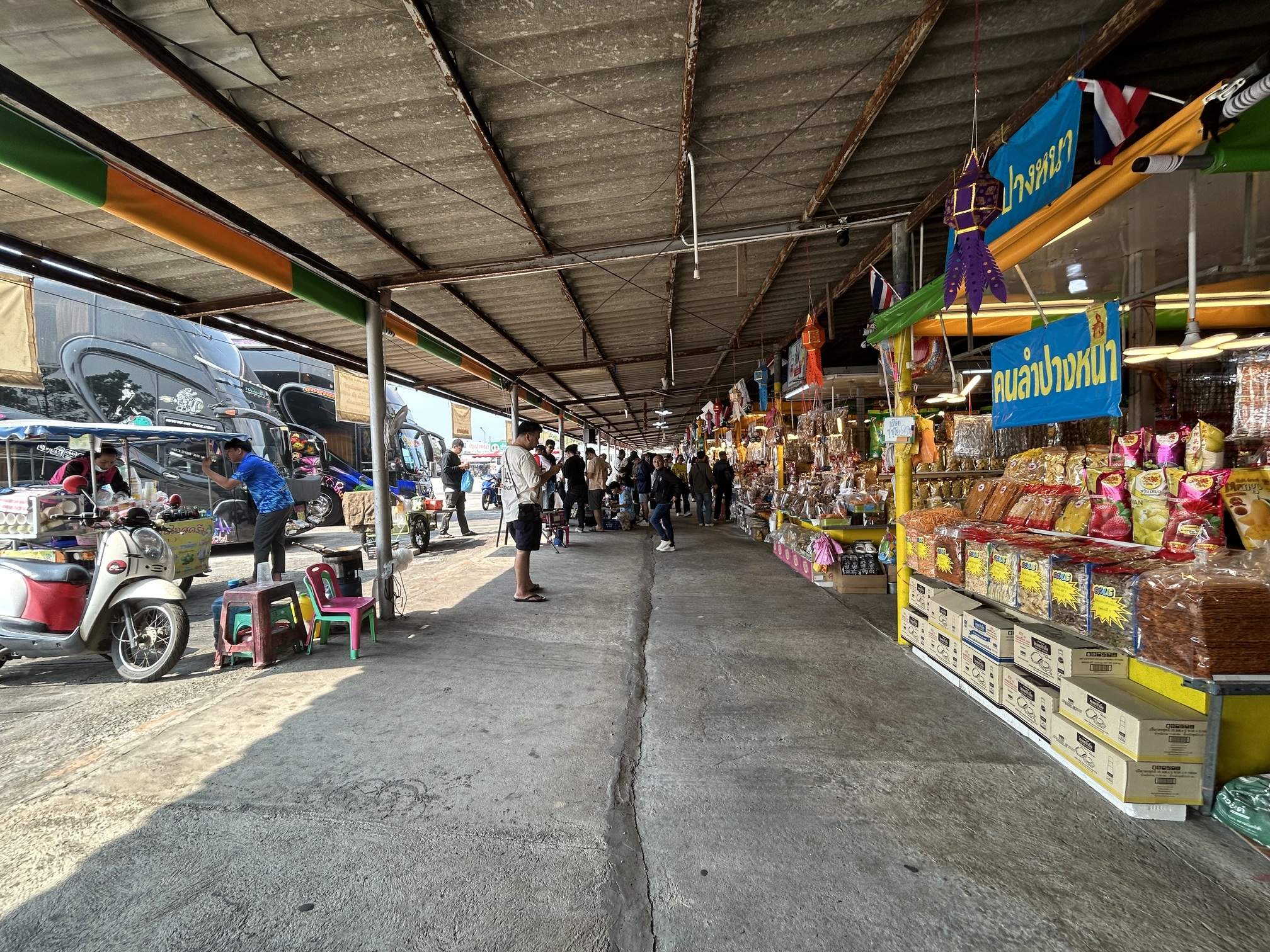
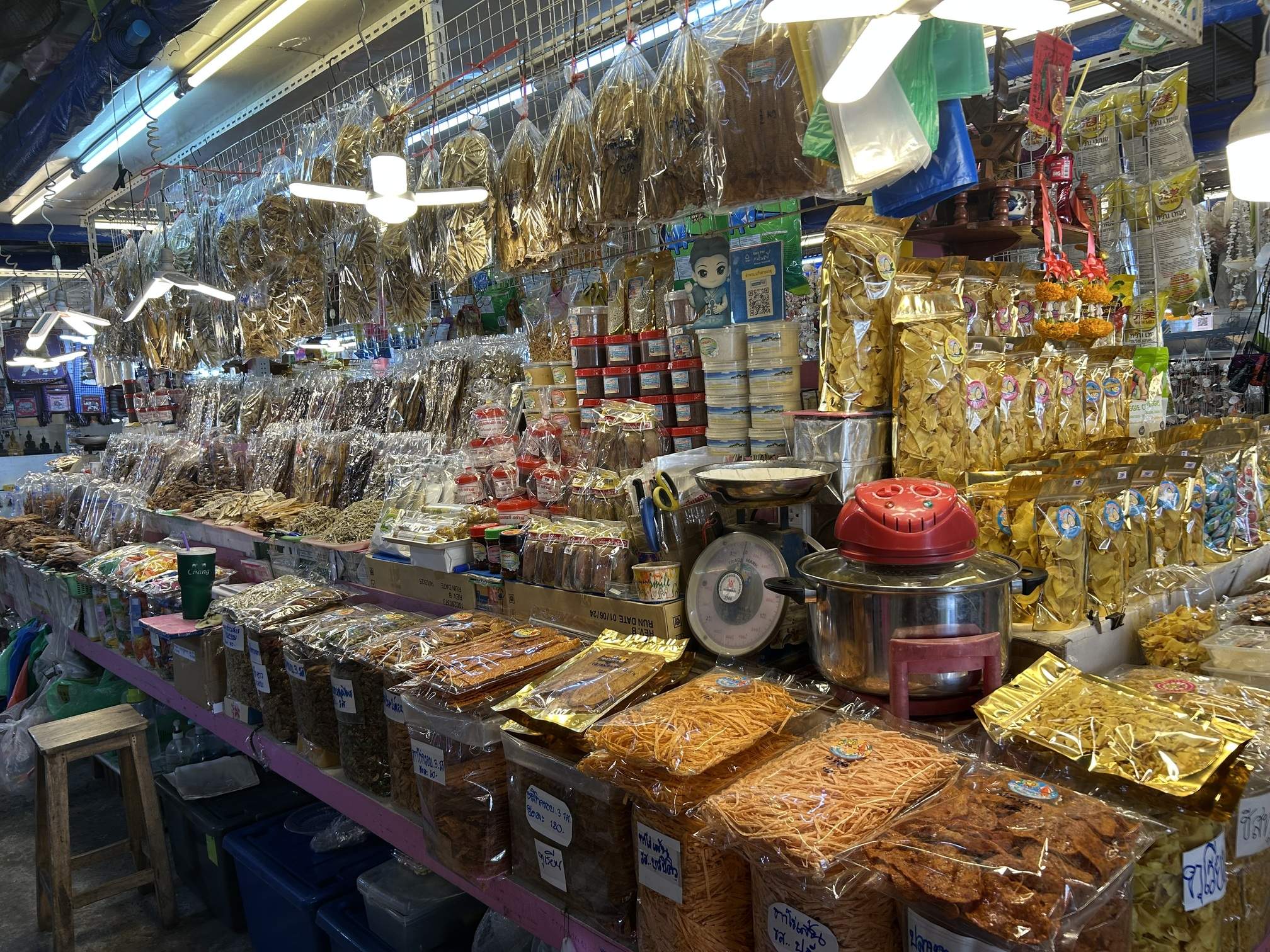

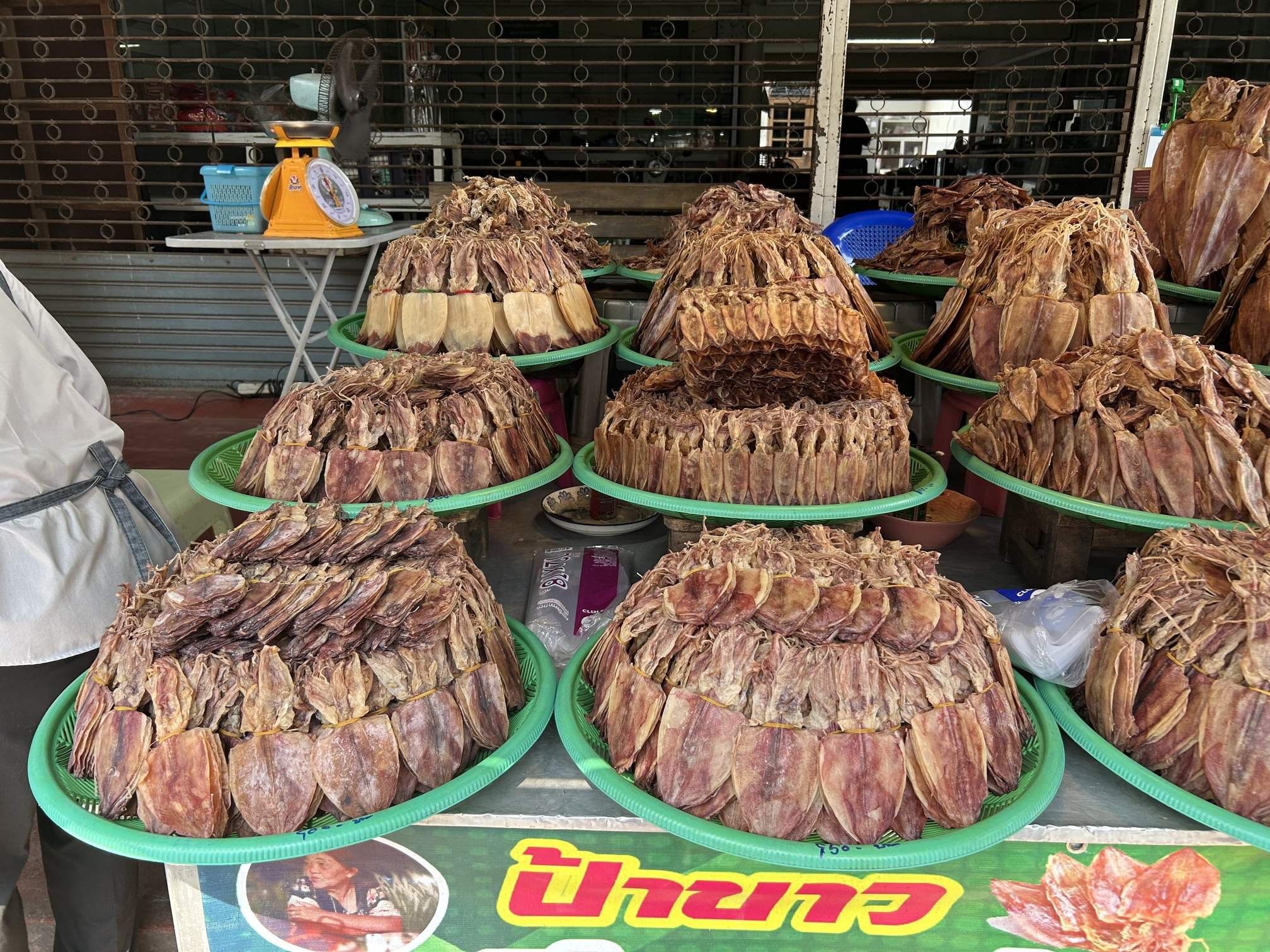
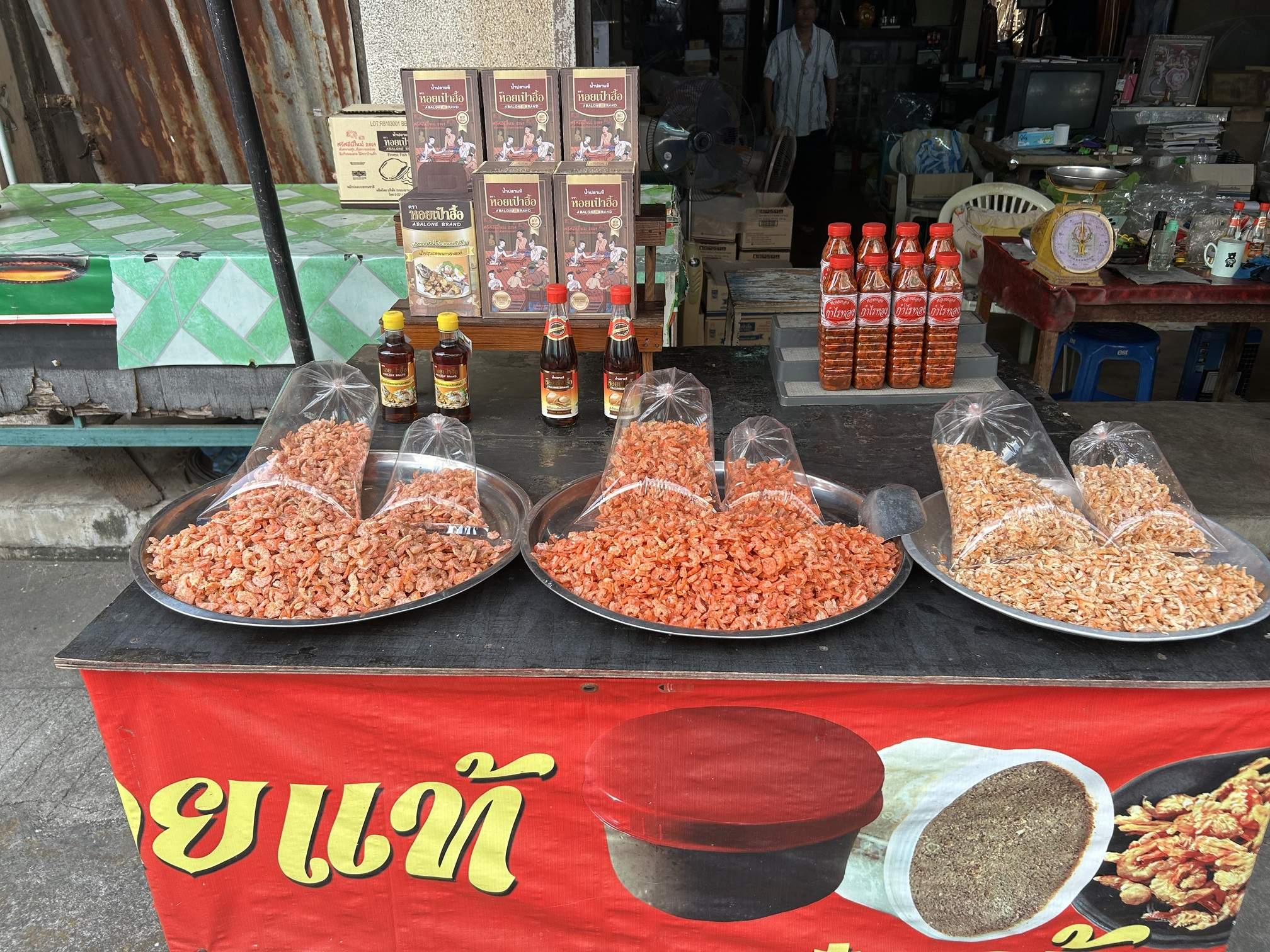
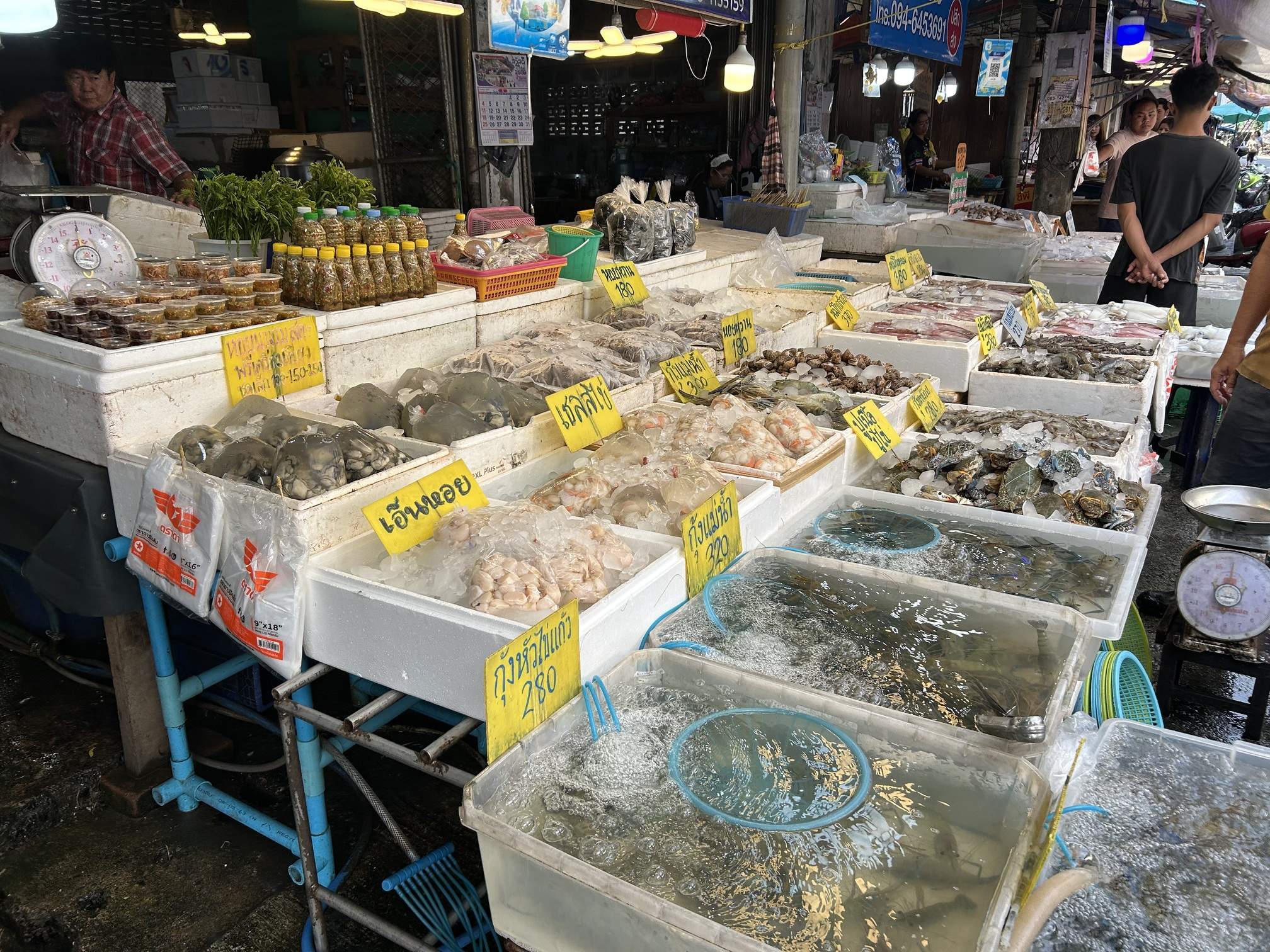
Technically, we missed the peak durian and mangosteen seasons, but we didn’t leave empty-handed. We stopped at Ban Phe for some snack shopping.
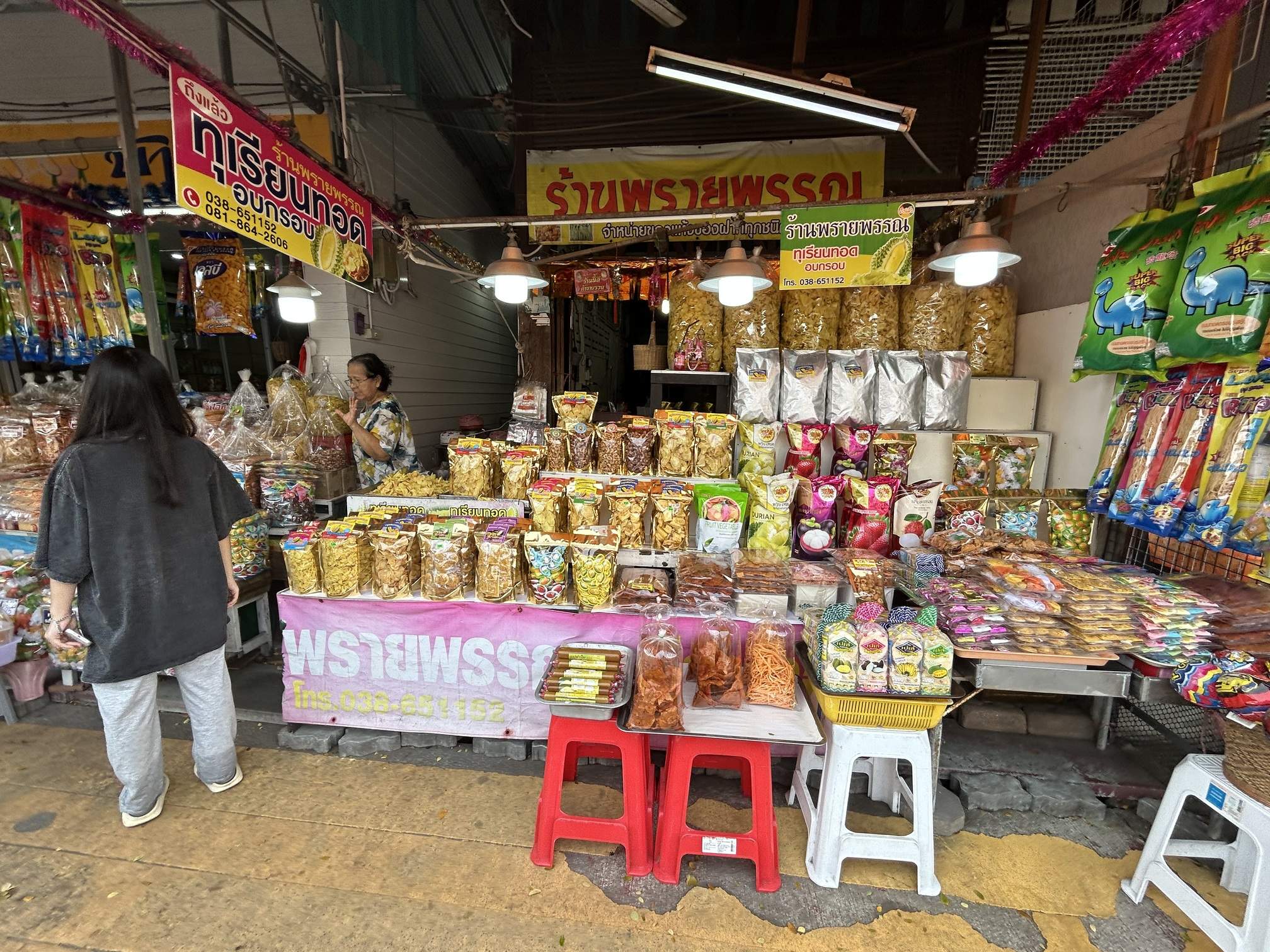
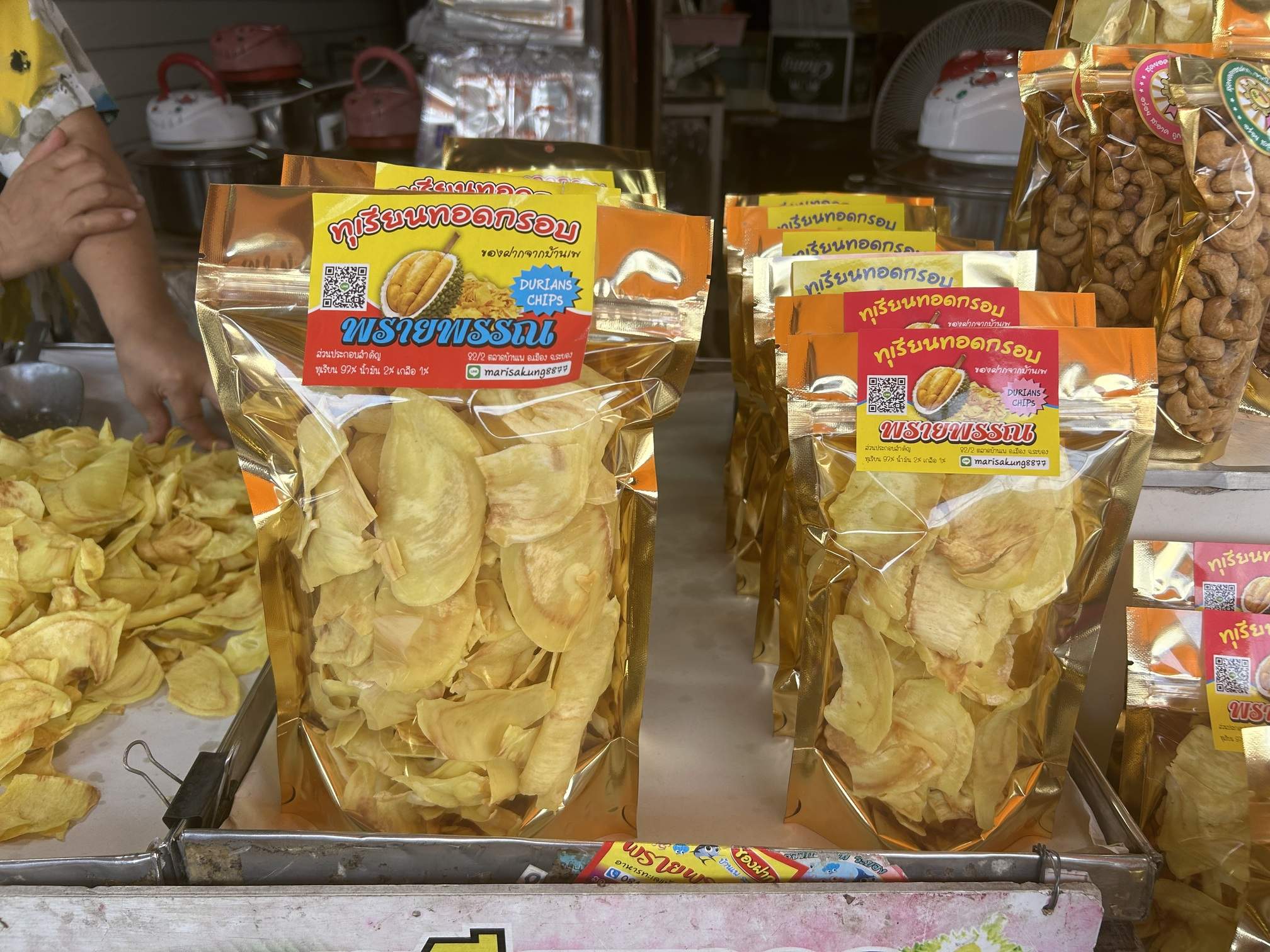
I was on a mission for Phraipan (พรายพรรณ) durian chips—a brand my mother-in-law bought years ago that I’ve craved ever since. We finally tracked them down at the 100-Year-Old Market (ตลาด 100 ปี).
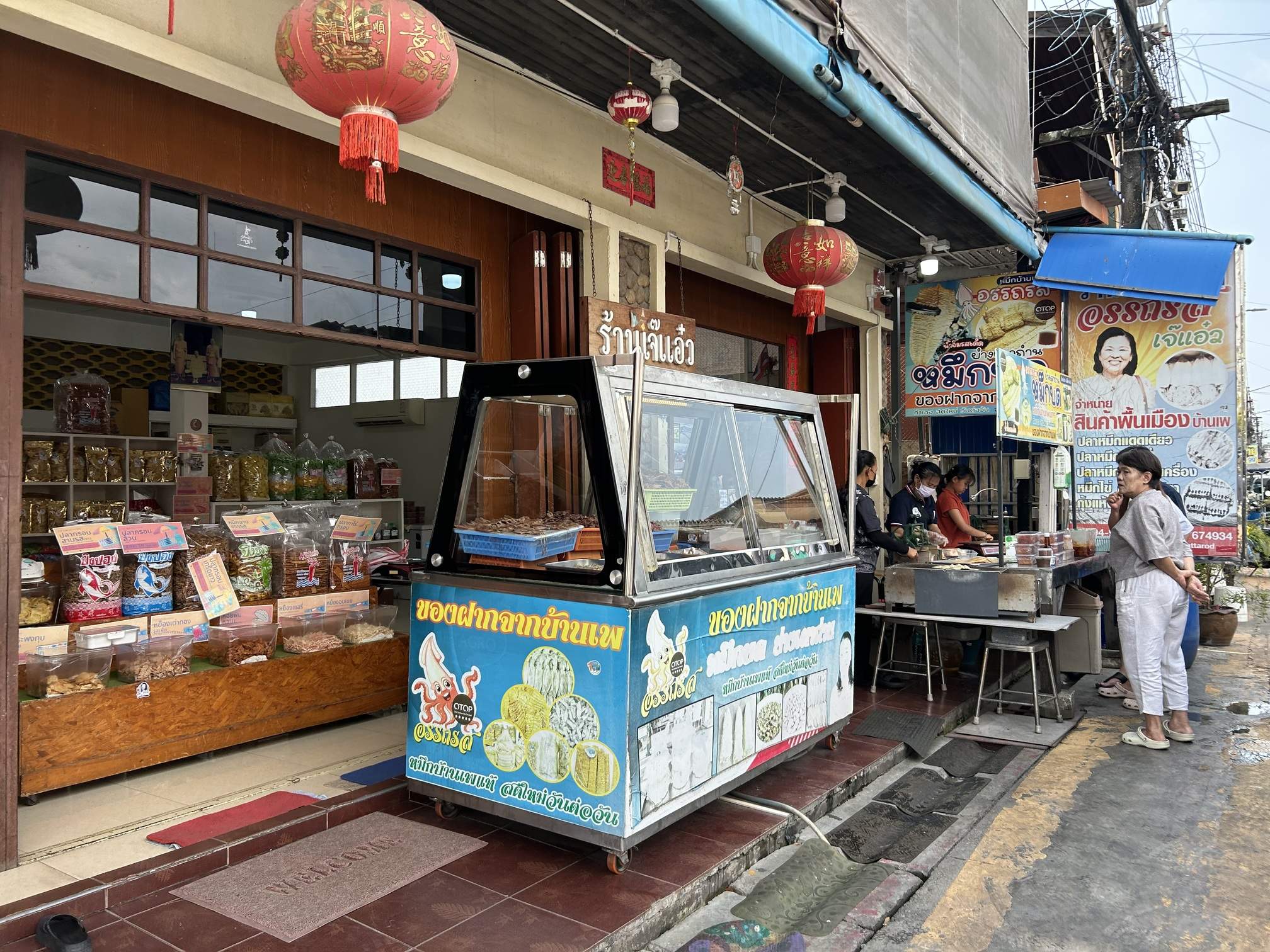
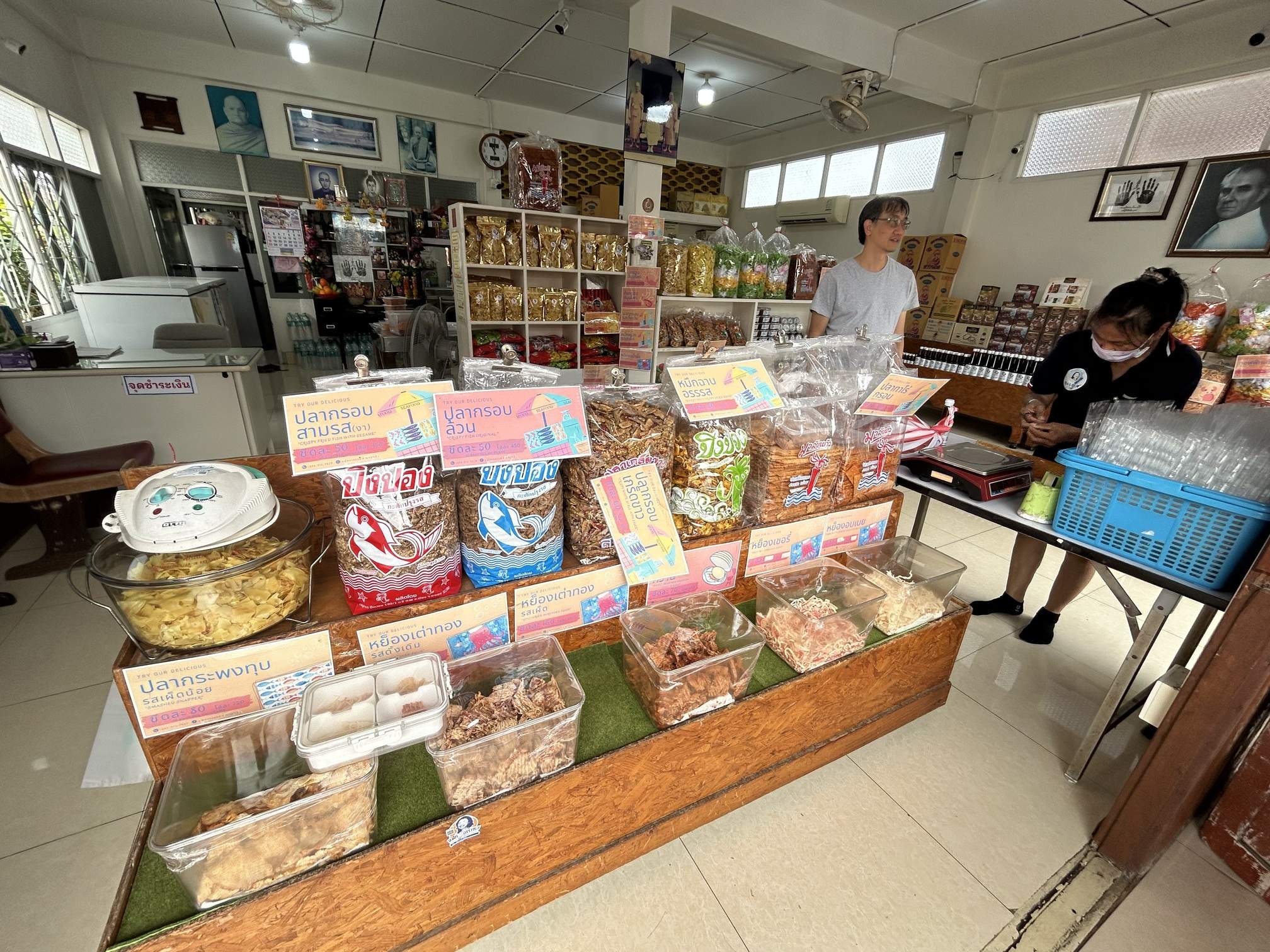
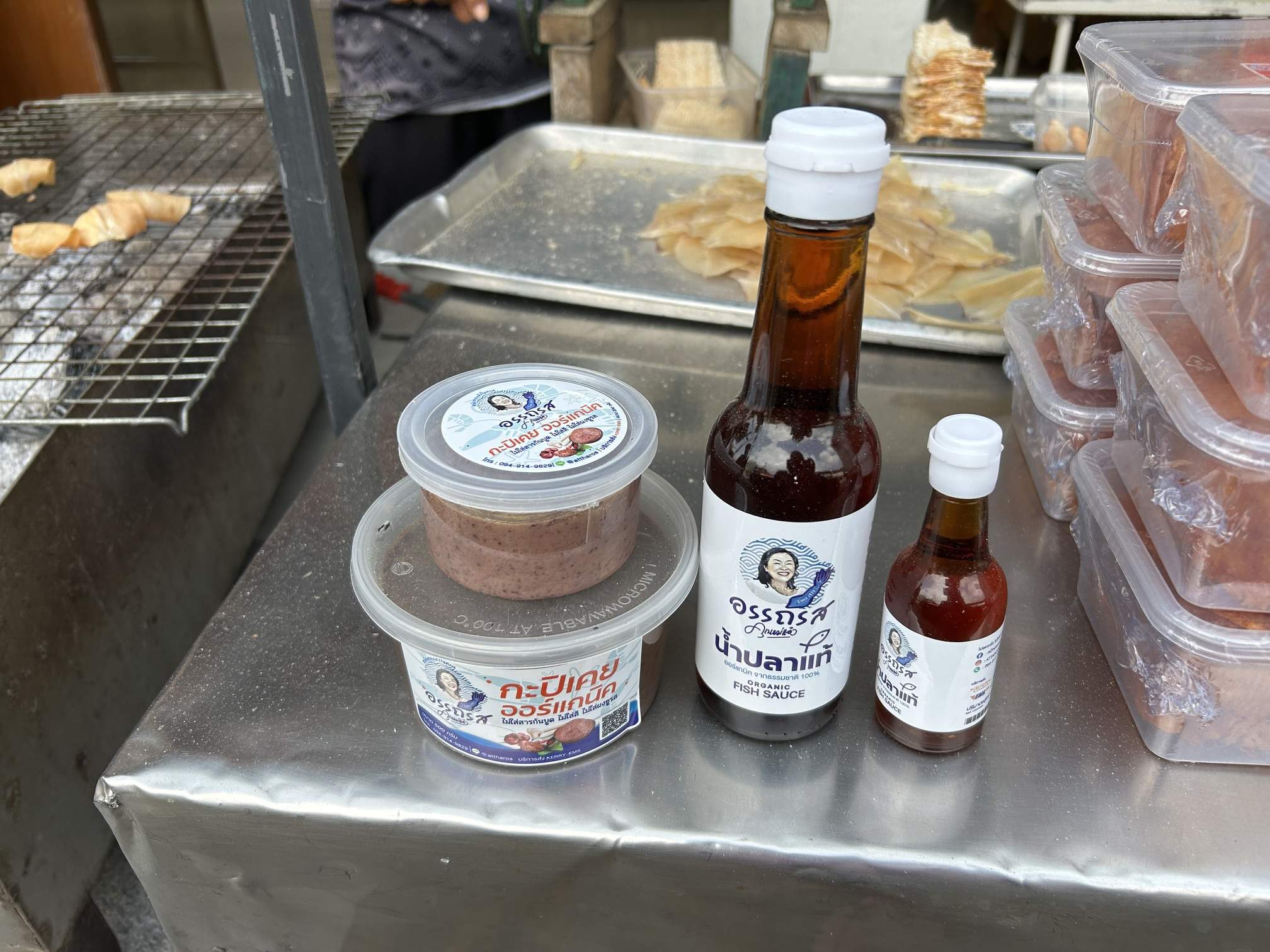
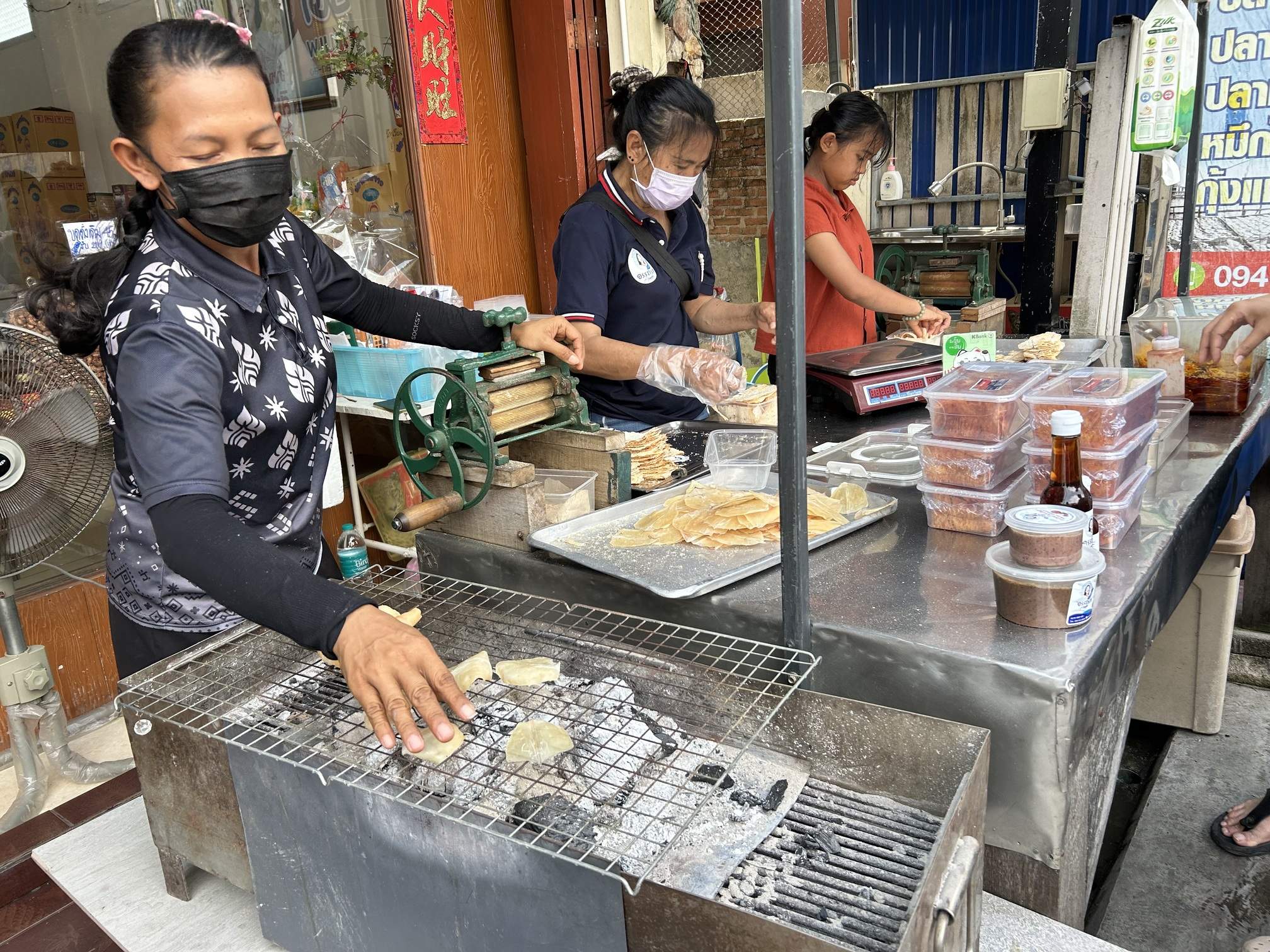

We also discovered a gem for charcoal-grilled shredded squid: ร้านหมึกอรรถรส คุณแม่แอ๋ว near the Rayong Fresh Market (ตลาดสตาร์). There was a small crowd (always a good sign!), and the smoky flavor was incredible.
🛵 Transportation Quirks: The “Saleng”
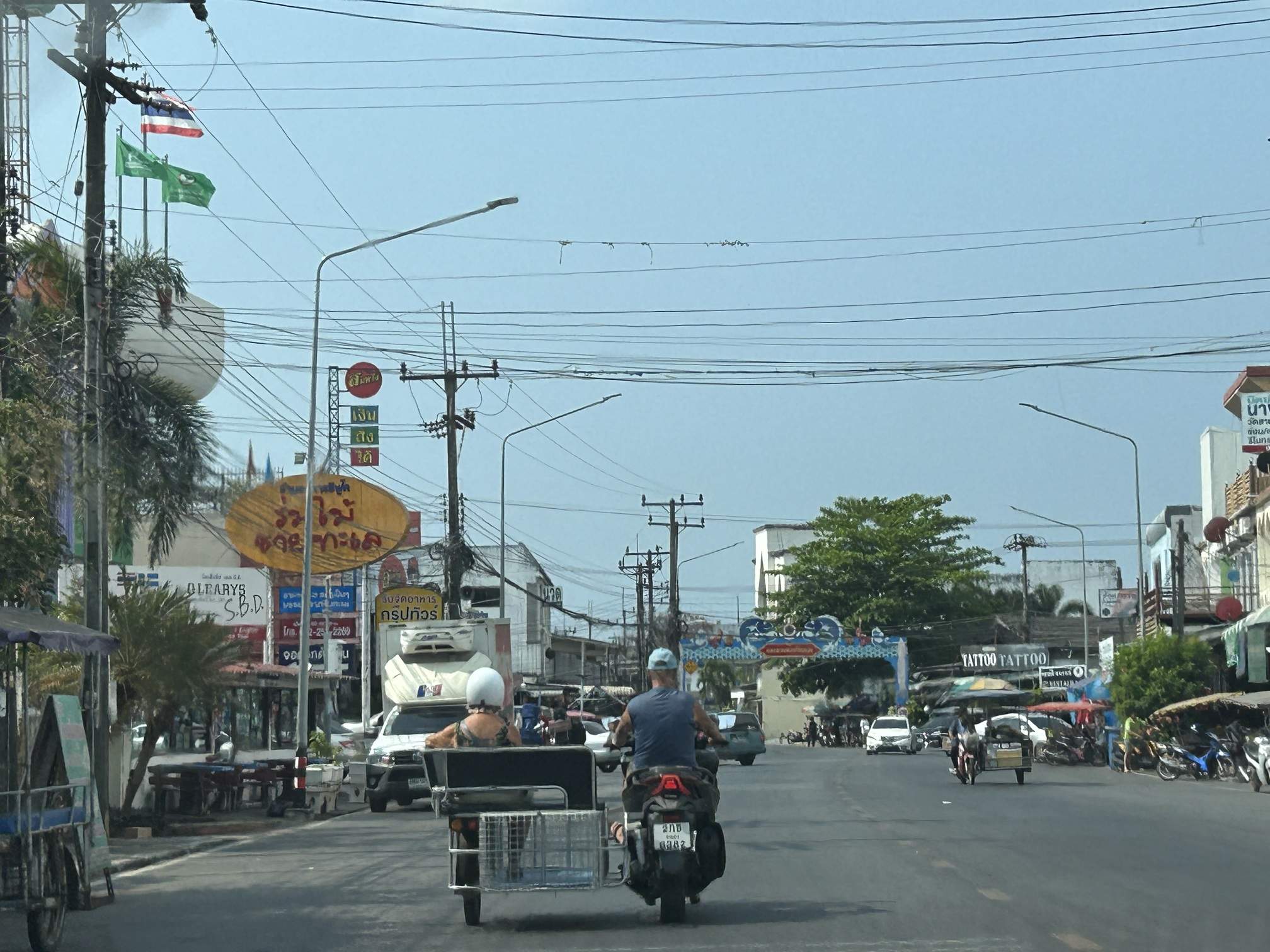
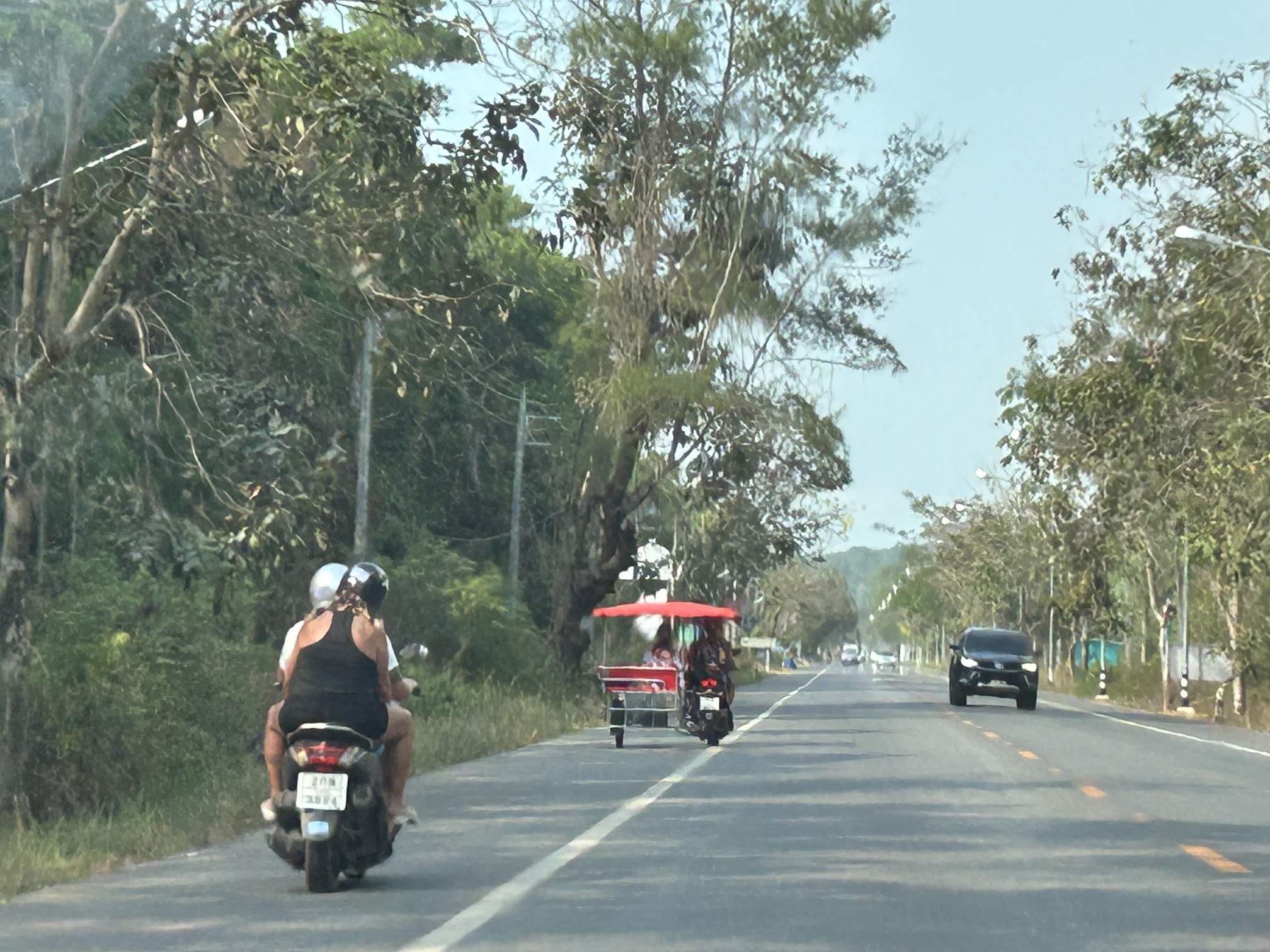
One thing that always amuses me in Rayong is seeing so many foreigners cruising around on motorbikes with sidecars, known locally as Saleng (ซาเล้ง) or Rot Puang Kang (รถพ่วงข้าง). While tourists use them for fun, these are the backbone of rural Thai life. You’ll usually see Mae-kha (vendors) using them to transport everything from fresh produce to entire mobile kitchens!
💡 Quick Tips for Rayong
Vibe: Stick to Laem Mae Phim (หาดแหลมแม่พิมพ์) if you want a local, quiet atmosphere away from the heavy tourist crowds of the main city.
Shop: Visit Ban Phe Market (บ้านเพตลาดสด) for the best prices on processed seafood (dried squid/shrimp) and fruit chips.
The Drive: Taking the Motorway (Route 7) is the most efficient path (approx. 3 hours).
Pro-Tip: Take the second section of the motorway to bypass Pattaya traffic entirely. We took this route on one leg and chose the alternative scenic route for the return trip—both are manageable and offer different views of the landscape!